Important Safety Checks Before Troubleshooting
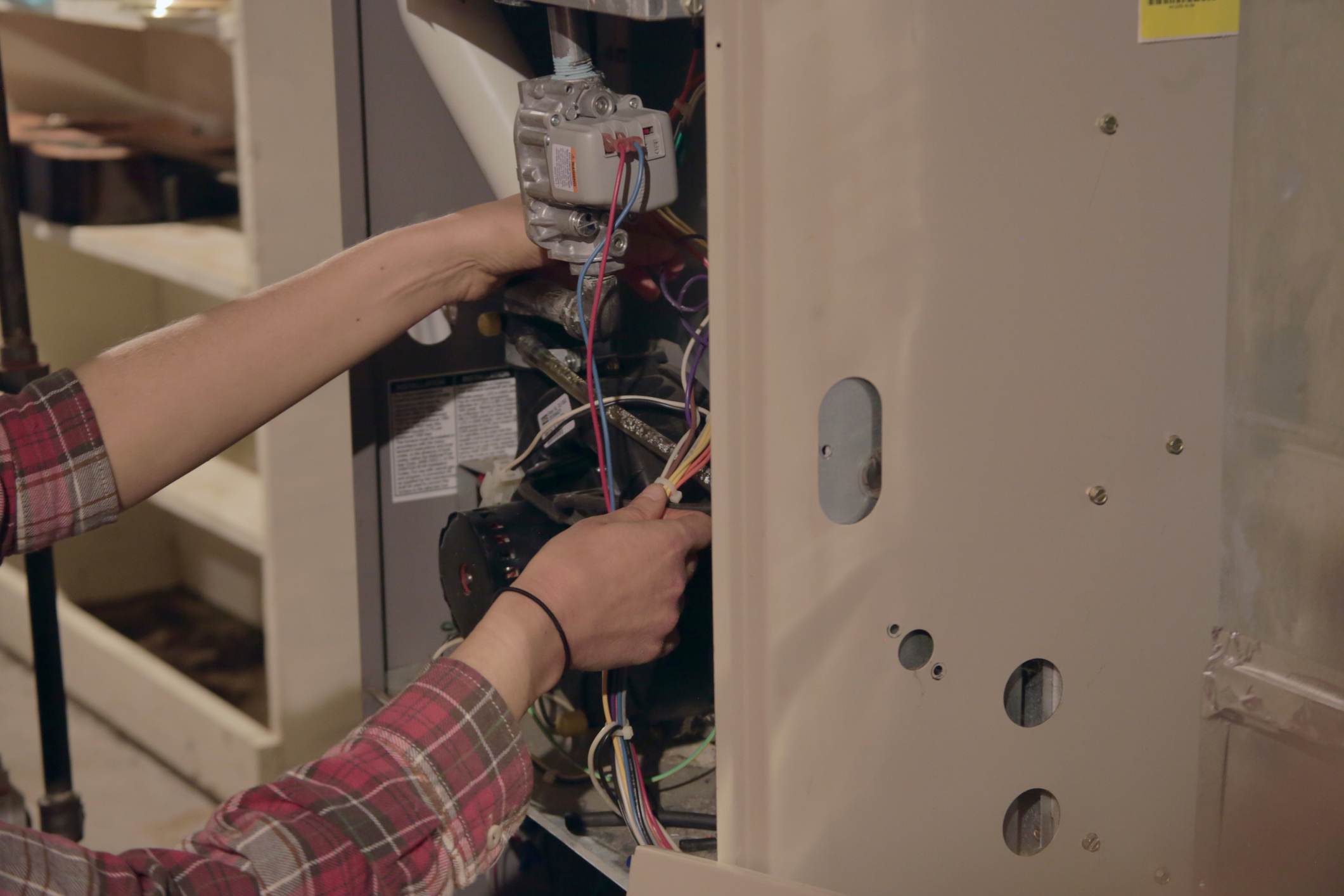
Before you check anything in the furnace, take a minute to run through these safety basics. Here’s what you should do:Turn off the power
First step, turn off the furnace using the furnace switch. If you’re ever inspecting internal components like the blower motor or heat exchanger, make sure the power is completely off at the breaker box or electrical panel.Know your gas valve
For gas furnaces, locate the gas valve and understand that working with gas lines is not a DIY task. Only qualified professionals should handle gas repairs.When to stop and call a pro:
- Smell natural gas? Evacuate your home and call your utility provider. This is a dangerous leak that needs immediate attention.
- Is the breaker constantly tripping? This could indicate a deeper electrical issue.
- Smoke, sparks, or signs of fire? Stop immediately. This is a clear fire hazard.
- Make sure your carbon monoxide detector is working, especially if your furnace is older or your home doesn’t have an updated system.
#1 Start With the Thermostat and Power
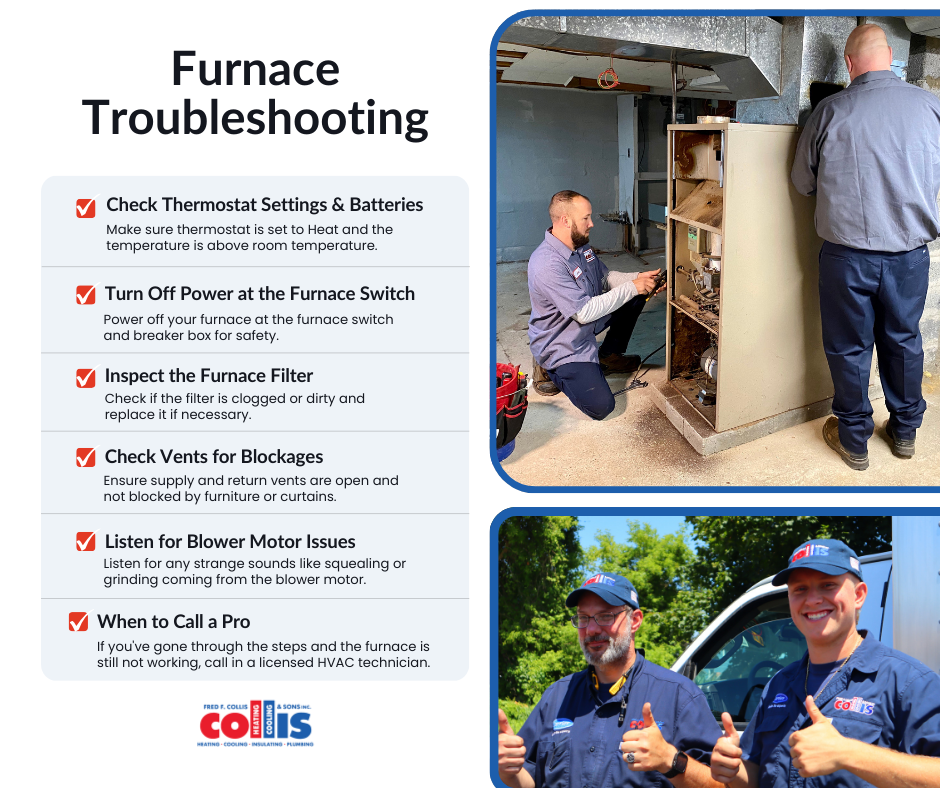
Check Thermostat Settings and Batteries
The thermostat is often the culprit when your furnace isn’t working. Start by making sure the thermostat is set to “Heat” and that the temperature setting is above the current room temperature. If the thermostat’s display is dim or blank, it might be time to replace the batteries. Also, check for any schedules or smart settings that could override manual adjustments.Confirm the Furnace Has Power
It’s easy to overlook, but your furnace won’t work if it’s not receiving power. Here’s what to check:- Is the furnace switch on?
- Check the circuit breaker in your electrical panel to see if it has tripped.
- If your system has a fuse box, check for any blown fuses.
- Make sure the furnace access door is properly latched; some units won’t run if the door switch is open.
#2 Fix Airflow Problems: Filters, Vents, and the Blower
Inspect and Replace the Furnace Filter
The furnace filter plays an important role in your furnace’s performance. A clogged filter can cause poor airflow, shutdowns, and even damage to the blower motor. Here’s how to keep things running smoothly:- Locate the filter: It’s usually near the return air duct.
- Check the condition: If it’s dirty or clogged, it’s time to replace it.
- Choose the right new filter: Make sure you’re using the correct size for your system.
Check Vents and Registers Throughout the Home
Blocked vents are a common issue for poor airflow. Walk through your home and make sure supply and return vents are clear of furniture, rugs, and curtains. Blocked vents can lead to uneven room temperature and short cycling. Don’t forget: poor airflow can also impact the cooling system / air conditioner if you have a shared HVAC system.Listen for Blower Issues
Your furnace blower should run smoothly and quietly. If you hear any strange sounds, like squealing or grinding, it may indicate a problem with the blower motor. A failing blower motor or loose connection is a job for an HVAC technician, as these parts require professional attention.#3 Fuel and Ignition Issues
Identify Your Heat Source: Gas Furnace, Oil Furnace, or Heat Pump?
Furnaces come in various types, including gas furnaces and oil furnaces. These systems can sometimes work together in one heating system, such as a dual-fuel system, where a heat pump is used for milder temperatures, and a gas or oil furnace kicks in when it gets colder. Note that troubleshooting steps may vary depending on the primary heat source, as each system has different components and issues to address.Gas Supply and Safety Checks
Start by checking that the gas valve is in the correct position. If you suspect a gas leak, leave the house immediately and call your utility provider. Never attempt to relight the furnace or troubleshoot further. This could lead to a dangerous leak.Ignition, Burners, and Flames
If your furnace is clicking but not lighting, or the burners aren’t staying lit, it could be a sign of an ignition problem. Here’s what you can check:- Look at the burner flames (if safe to do so). They should be blue and steady. If you see tall yellow/orange flames, it could indicate a combustion issue.
- If your furnace has a sight glass, check for visible burner issues.
When the Problem Is Bigger Than the Furnace
System-Wide Issues in Your HVAC System
If your furnace isn’t working, the problem might not just be the furnace. Components like the blower, thermostat, and control board can affect the entire HVAC system. In these cases, a no-heat issue might be related to something deeper in the system, like faulty wiring or sensors.The Role of Professional Maintenance
Regular maintenance from a pro can help you avoid bigger issues down the line. Here’s what’s included:- Inspecting the heat exchanger for cracks.
- Checking all wiring and tightening any loose connections.
- Testing safety switches and ignition.
- Cleaning internal components.
- Replacing the furnace filter.
When to Call an HVAC Technician (and What They’ll Do)
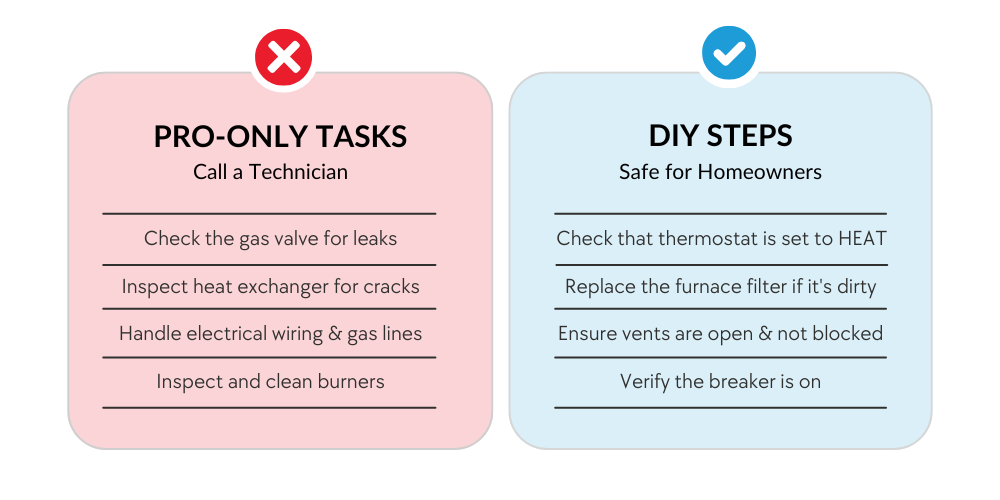
While some furnace problems can be fixed on your own, others require a professional touch. Here are a few red flags that mean it’s time to call Fred F. Collis & Sons:- Repeatedly tripping breaker or blown fuses
- Burning or electrical smells
- Loud banging or scraping noises
- Any sign of gas or carbon monoxide issues
- Visible damage to internal components