Heating and Cooling Challenges in Older Homes
Many older homes were built before central air and forced-air heating became common. That creates several hurdles when it’s time to install or replace an HVAC system. These homes present specific obstacles that require careful planning.Common Issues in Old Homes:
- No existing ductwork
- Limited space in walls or attics for new components
- Thicker walls and solid materials that are hard to cut through
- Historic home features that need to be preserved
- Inconsistent room temperatures
- Higher-than-average energy consumption
- Drafty windows and doors
- Poor insulation
Common Signs Your Old House Needs an HVAC Upgrade
Unsure if your current system is due for an upgrade? Watch for these signs:- Inconsistent room temperatures: Hot and cold spots throughout the entire house can mean your system isn’t distributing air properly.
- Frequent repairs: Constant service calls and worn-out parts are often more costly over time than a heating system replacement.
- Noisy operation: Rattling, buzzing, or clunking noises could indicate aging components or poor installation.
- Rising energy bills: If your energy costs are steadily climbing, outdated HVAC equipment may be to blame.
Exploring the Best HVAC Options for Older Homes
Let’s take a look at the most common HVAC options that can be tailored to fit older homes. Here’s a quick comparison: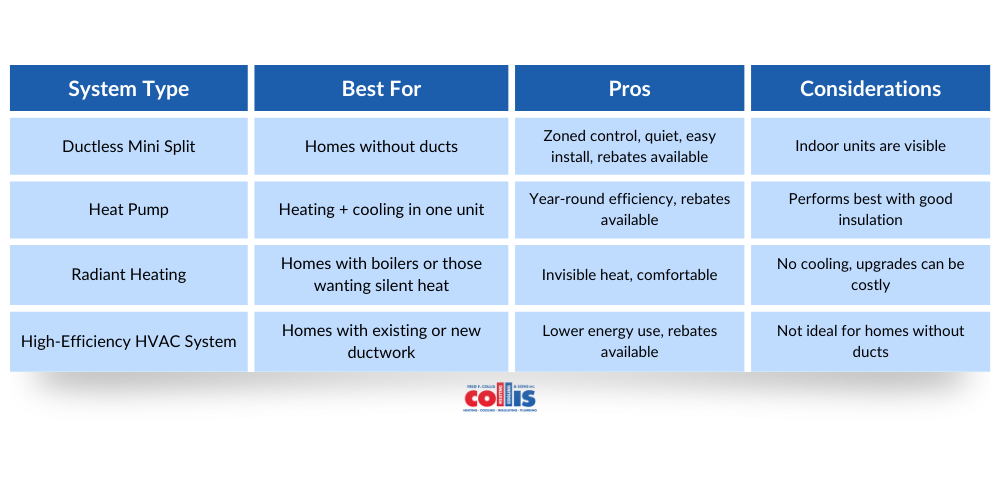
Ductless Mini Split Systems: Flexible and Efficient
A ductless mini split system consists of an outdoor compressor and one or more indoor air handlers. These units are connected via slim refrigerant lines. No ductwork is needed. These units are best for homes without ducts, additions, attics, sunrooms, and areas with limited space.Benefits of Ductless Systems:
- Perfect for homes with no existing ducts
- Zoned temperature control (heat or cool individual rooms)
- Quiet operation
- Easy to install with minimal disruption
Keep in Mind:
- Requires appropriate placement for optimal airflow
- Indoor units mount on walls or ceilings and remain visible
Radiant Heating and Boiler Systems
These systems warm your home by circulating hot water through radiators, baseboards, or underfloor tubing.Pros:
- Provides steady, consistent heat
- Doesn’t blow dust or allergens around
- Great for homes with thick walls or hardwood floors
Heat Pumps: One System for All Seasons
Heat pumps are becoming more common in New York homes thanks to their ability to both heat and cool. They extract heat from outside air, even in freezing temperatures, and can reverse to cool air during the summer months.Why They’re a Smart Choice:
- Efficient heating and cooling
- Lower energy use compared to oil or baseboard systems
- Can be used with or without ducts
High-Efficiency HVAC Systems
High-efficiency systems are modern units that use less energy to heat or cool your home. These include ENERGY STAR® rated furnaces, air conditioners, and heat pumps with high SEER and AFUE ratings.Why they work for old homes:
- Lower energy consumption = lower monthly bills
- Advanced controls for better performance
- Paired with other upgrades, like upgraded insulation, they help bring an older home up to today’s comfort standards
Zoning and Smart Thermostats: Fix Uneven Heating
Uneven heating is one of the biggest complaints in older homes. By using zoning systems and smart thermostats, you can give each room its own temperature setting.Advantages:
- No more overheating one room to warm another
- Cut energy consumption by not heating empty spaces
- Smart thermostats adapt to your routine over time
Insulation and Air Sealing: Before You Install HVAC
Proper insulation for older homes is one of the most effective upgrades you can make before investing in HVAC equipment. Without it, even the most efficient system will struggle to maintain a steady temperature.Upgrade Areas:
- Attic / Crawl Space: Often the biggest source of heat loss
- Basement / Rim Joist: Prevents cold air from rising
- Air Sealing: Targets gaps around windows, doors, and outlets
FAQs
Do I need to replace my entire system, or can I upgrade parts?
In many cases, you can add components, like mini-splits or a new boiler, without replacing everything. A professional HVAC contractor will help you decide.Will adding a new HVAC system increase my home’s value?
Yes. Buyers value updated systems that improve comfort, energy savings, and home longevity, especially in older homes.Can I install air conditioning without tearing up the house?
Yes. Mini-split systems offer air conditioning benefits without major damage to the existing infrastructure, and they can be customized to your home’s specific cooling needs.Budgeting for HVAC: What It Costs and How to Save
Upgrading your HVAC system is an investment, but it doesn’t have to break the bank. There are several rebate and incentive programs available to homeowners in New York.Programs You May Qualify For:
- NYSERDA EmPower+ Program
- New York State Clean Heat Program
- Home Energy Assistance Program (HEAP)
- National Grid / NYSEG Energy Savings Programs
- Carrier Cool Cash Rebates
Upgrade Your HVAC System with Fred F. Collis & Sons
 At Fred F. Collis & Sons, we’ve been helping homeowners in Central New York upgrade their heating and cooling systems since 1936. Whether your home is 30 years old or over 100, we’ll help you find a system that fits your space and budget.
Why Homeowners Trust Collis:
- We’re a local, family-owned business that has been serving this community with integrity and transparency since 1936
- Our technicians are factory-trained and highly skilled in their craft
- We walk you through all available rebates and incentives so that you can save as much as possible on your project