Why Does Insulation Matter for Older Homes?
Upgrading insulation in an old house offers several key benefits:- Lower Heating Costs: Reduce energy waste and save money on heating bills.
- Improved Comfort: Maintain a consistent indoor temperature and eliminate drafts.
- Preserve Historic Integrity: Protect original materials and prevent issues like condensation and mold.
How to Assess Your Home’s Insulation
Before making any insulation upgrades, it’s important to evaluate where heat is escaping and where improvements can be made. A proper assessment helps determine the best approach while ensuring maximum energy efficiency.Signs Your Old Home is Under-Insulated:
- Uneven temperatures between rooms
- High heating and cooling bills
- Drafts around windows and doors
- Ice dams forming on the roof in winter
- Cold floors, especially on the first level
- Condensation or moisture buildup on walls or ceilings
Common Problem Areas in Old Homes
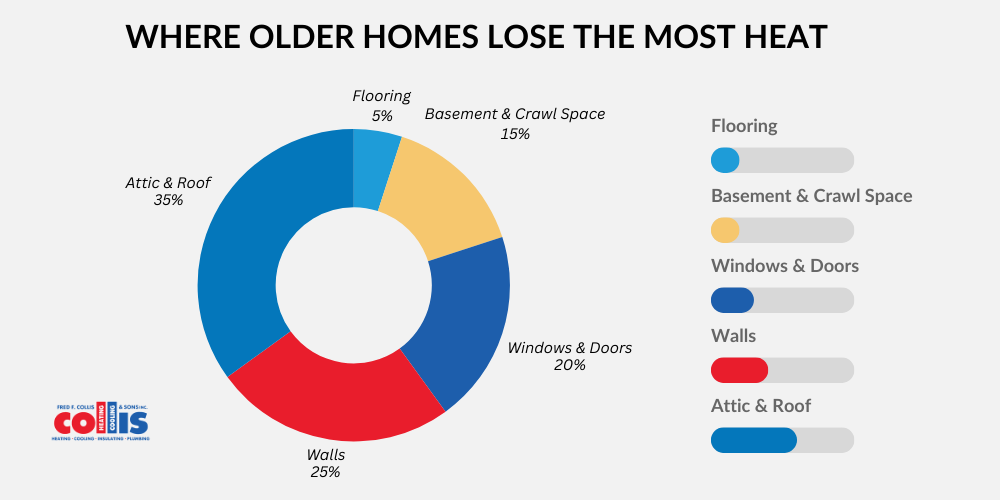 Here are the most common areas where older homes lose heat, along with tips on how to assess the insulation in each one:
- Attic & Roof: Heat naturally rises, and without proper insulation, an attic can be the biggest source of energy loss. Check if there’s existing insulation and whether it meets modern energy-efficiency standards. If the insulation looks thin, compressed, or deteriorated, it may need to be replaced or supplemented.
- Exterior Walls: Many older houses have little to no exterior wall insulation, making them susceptible to heat loss. A simple way to check is by removing an outlet cover on a wall—if there’s no insulation behind it, your walls may be under-insulated.
- Basement & Crawl Spaces: Check for exposed foundation walls, unsealed rim joists, or cold floors above. Gaps and lack of insulation in these areas allow heat loss and drafts. Insulating basement walls, rim joists, and crawl space dirt floors help improve the comfort and energy efficiency of the home.
- Windows & Doors: Single-pane windows and gaps around door frames allow cold air to enter, increasing drafts and energy loss. Air sealing these areas can make a huge difference in your comfort and energy usage.
- Flooring: Hardwood or tile floors without insulation underneath can make walking barefoot in winter unbearable. Adding insulation beneath these floors can help retain heat and improve comfort.
Best Insulation Methods for Older Homes
 Each part of your home requires a different approach when it comes to insulation. Here are the best solutions for each area:
1. Attic Insulation
The attic is one of the easiest and most cost-effective areas to insulate. Proper attic insulation prevents heat from escaping and helps maintain a consistent indoor temperature.Best Options:
- Blown-in cellulose insulation: Fills gaps and settles well in irregular spaces.
- Spray foam insulation: Provides excellent air sealing and high R-value per inch.
2. Wall Insulation
Older homes often have uninsulated walls, but retrofitting insulation can be done without major renovations.Best Options:
- Dense Pack Cellulose Insulation: A highly effective form of blown-in insulation that fills wall cavities without removing drywall or plaster.
- Spray foam insulation: Expands to fill gaps, providing both insulation and air sealing.
3. Basement & Crawl Space Insulation
Many homeowners overlook their basement and crawl space when insulating, but these areas contribute significantly to energy efficiency and overall home comfort.Best Options:
- Rim joist insulation: The rim joist is one of the most significant areas for heat loss in a basement. Applying spray foam insulation here creates an airtight seal, preventing drafts and moisture infiltration.
- Spray foam insulation: Ideal for sealing cracks and insulating hard-to-reach areas.
- Vapor barrier: For crawl spaces with dirt floors, a heavy-duty vapor barrier is rolled out over the floor and sealed to the walls using spray foam insulation.
4. Windows & Doors
Replacing windows in an older home isn’t always necessary. Instead, focus on reducing drafts.Best Solutions:
- Air sealing: Sealing gaps and cracks around window frames and doorways with caulk or expanding foam prevents unwanted air infiltration.
- Weatherstripping & caulking: A simple, low-cost way to seal gaps around windows and doors.
- Storm windows: Provide an additional barrier against drafts without replacing historic windows.
- Door sweeps: Installed along the bottom of doors to block drafts and prevent heat loss. Ideal for exterior doors and older homes with uneven thresholds.
- Thermal curtains: Help retain warm air in winter and block excess sun in summer.
Challenges & Common Mistakes When Insulating an Older Home
Adding insulation to an older home can greatly improve comfort and energy efficiency, but it comes with challenges that require careful planning. Unlike modern homes, older homes may have structural, safety, or moisture concerns that need to be addressed before installing new insulation.Moisture & Ventilation Control
Older homes often have different airflow patterns compared to newer, airtight constructions. Improper insulation can trap moisture inside walls and attics, leading to mold growth, wood rot, and structural damage. To avoid these issues:- Use vapor barriers when necessary to prevent moisture buildup.
- Ensure proper ventilation in attics and crawl spaces to allow excess moisture to escape.
- Never block soffit vents when insulating an attic, as ventilation helps prevent ice dams in winter.
Potential Structural & Safety Concerns
Before insulating, it’s crucial to assess the home’s structure and safety risks:- Outdated Electrical Wiring: Many older homes still have knob-and-tube wiring, which can pose a fire hazard if surrounded by certain insulation types. A professional should inspect the wiring before proceeding.
- Hidden Moisture Issues: Older homes may have water damage behind walls or in basements. Insulating over damp areas can trap moisture, leading to further deterioration.
- Fragile Construction Materials: Homes with historic plaster walls or delicate wood siding require special care to avoid damage when installing insulation.
Skipping Air Sealing
One of the most common mistakes homeowners make is insulating without sealing air leaks first. Even with high-quality insulation, air gaps allow heat to escape, reducing efficiency. Make sure to seal gaps in these areas before insulating:- Attic floors and recessed lighting fixtures
- Around chimneys and plumbing penetrations
- Gaps around windows, doors, and electrical outlets
Choosing the Wrong Insulation Type
Not all insulation materials work well in older homes. Some can trap moisture, while others may not be suitable for historic structures. A professional can help determine the best insulation type for your home’s climate and structure, ensuring long-term performance without damaging the original materials.Why Professional Insulation Services Are Worth It
Because of these challenges, working with an experienced insulation contractor is highly recommended. While DIY insulation projects can be tempting, older homes often require specialized techniques to ensure proper insulation without compromising the home’s structure.Benefits of Hiring Fred F. Collis & Sons for Insulation Services:
- Expert Assessment: We conduct free home energy assessments to identify the best insulation solutions for your home.
- Customized Solutions: Our insulation professionals use the best materials and methods to insulate your home with your safety and comfort top of mind.
- Energy Savings: Our insulation services help lower heating and cooling costs, making your home more energy-efficient.
- Rebates & Incentives: We help homeowners take advantage of available rebates and energy efficiency incentive programs. Depending on your household size and income, you may be able to take full advantage of our insulation services at no out-of-pocket cost.
Available Energy Efficiency Programs & Rebates for New Yorkers
Many New York residents can take advantage of state-sponsored energy efficiency programs to make insulation upgrades more affordable—or even free!- NYSERDA Comfort Home Program: Provides financial assistance for insulation upgrades, air sealing, and other home energy improvements.
- EmPower+ Program: Offers free energy efficiency improvements for income-eligible households, including insulation and air sealing services.
Don’t Miss Out on These Savings – Call to See If You Qualify!