The Short Answer: Window air conditioners are being replaced by central air systems because they provide better whole-home comfort, improved energy efficiency, and increased property value without the noise, installation hassles, and security concerns of window units.The Shift to Whole-Home Cooling Solutions
More homeowners across New York are making the switch from window AC units to central air conditioning systems. This trend reflects a growing understanding that whole-home cooling solutions offer superior comfort and long-term value. Window air conditioners once dominated the residential cooling market, but their limitations have become more apparent as central air technology has improved and become more affordable. Today’s central AC systems provide consistent cooling throughout the entire home while offering better energy efficiency and enhanced indoor air quality. This shift represents more than just an upgrade in comfort. Homeowners are discovering that central air conditioning can actually reduce their energy bills while eliminating the seasonal hassle of installing and removing window units. 
Understanding the Limitations of Window Units
Energy Efficiency Concerns
Window AC units typically operate at lower efficiency levels compared to modern central air systems. Most window air conditioners lack the advanced features found in Energy Star-certified central AC systems, such as variable speed compressors that adjust cooling output based on demand. These units often cycle on and off frequently, which wastes energy and creates temperature fluctuations. The result is higher energy bills and inconsistent comfort throughout your home.Limited Cooling Capacity
Window units are designed for single-room cooling, making them ineffective for larger spaces or multiple rooms. Key limitations include:- Inadequate square footage coverage – Most window units cool only 150-500 square feet effectively
- Poor air circulation – Cool air stays concentrated near the unit
- Uneven temperatures – Hot spots develop in areas far from the window unit
- Insufficient cooling – Struggles during peak summer heat
Practical and Security Drawbacks
Installing and maintaining window AC units creates several ongoing problems: Installation Issues:- Heavy units require careful mounting and support
- Seasonal installation and removal becomes a twice-yearly chore
- Small gaps around units allow bugs and pests into your home
- Improper installation can damage window frames
Security Concerns:- Window units make break-ins easier by providing access points
- Ground-level installations are particularly vulnerable
- Units can be stolen from accessible windows
- Emergency exit routes may become blocked
Noise and Aesthetic Problems
Window air conditioners create noise both inside and outside your home. The compressor and fan motors generate constant humming and cycling sounds that disrupt sleep and daily activities. Noise levels often exceed 50 decibels, comparable to moderate rainfall. From an aesthetic standpoint, window units detract from your home’s appearance. They block natural light, obstruct views, and create an unfinished look from both inside and outside your property.Benefits of Central Air Systems
Whole-House Temperature Control
Central air conditioning provides consistent cooling throughout your entire home. Unlike window units that create hot and cold zones, a central ac system distributes conditioned air evenly through a duct system connected to every room. This consistent cooling means:
- No more moving between comfortable and uncomfortable spaces
- Balanced temperatures from room to room
- Better humidity management throughout the home
- Improved indoor air quality with proper filtration
Energy Efficiency and Cost Savings
Modern central air conditioners significantly outperform window units in energy efficiency. Features that contribute to energy savings include: Advanced Technology:- Variable speed compressors that adjust output automatically
- Higher Seasonal Energy Efficiency Ratio (SEER) ratings
- Energy Star certification standards
- Smart thermostats for optimized operation
Long-term Savings:- Lower energy bills despite higher upfront costs
- Reduced maintenance needs
- Extended equipment lifespan with professional installation
Quality of Life Improvements
Central air systems operate much more quietly than window units. The outdoor compressor handles the noisy components, while the indoor unit runs virtually silently. This means better sleep quality and less disruption to daily activities. Additional comfort benefits include:
- No blocked windows or obstructed views
- Increased living space without bulky units
- Better indoor air quality through advanced filtration
- Consistent cool airflow throughout all rooms
Property Value Enhancement
Installing central air conditioning typically increases your home’s market value. Real estate professionals report that homes with central air sell faster and for higher prices than those relying on window units or no air conditioning. The investment in central air often pays for itself through:
- Increased property valuation
- Faster home sales when you’re ready to move
- Broader appeal to potential buyers
- Modern comfort expectations in today’s market
Making the Transition: What to Consider
Home Evaluation and Ductwork
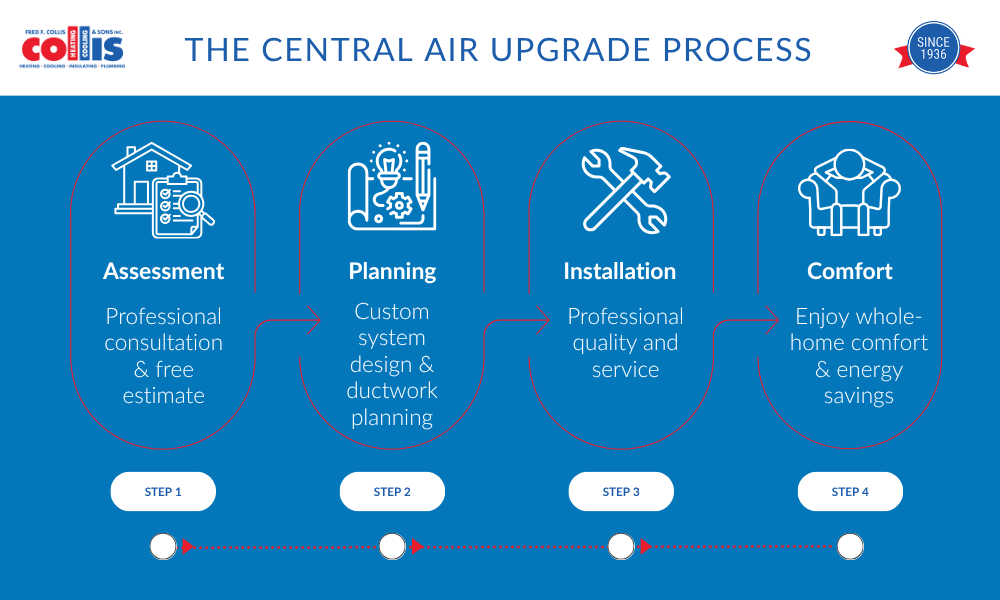
Before installing central air, a professional assessment determines the best approach for your home. This evaluation includes: Ductwork Analysis:- Existing duct system inspection and condition
- Sizing requirements for proper airflow
- Necessary modifications or additions
- Sealing and insulation improvements
System Sizing:- Accurate cooling load calculations based on square footage
- Consideration of insulation levels and window efficiency
- Account for local climate conditions
- Right-sizing to avoid short cycling or inadequate cooling
Installation Process
The professional installation timeline depends on your home’s requirements. The process involves:- Preparation – Electrical connections and outdoor compressor placement
- Indoor Unit Installation – Connecting to existing or new ductwork
- Testing and Commissioning – System performance verification
- Customer Education – Thermostat operation and maintenance guidance
Alternative Solutions for Older Homes
Homes without existing ductwork have options beyond traditional central air: Ductless Mini-Split Systems:- Individual indoor units for targeted cooling
- No ductwork required for installation
- Zone control for different areas
- Highly efficient operation
- Thousands available in rebates through the Comfort Home and NY Clean Heat programs
High-Velocity Systems:- Smaller ducts that fit in tight spaces
- Minimal disruption during installation
- Effective for older home retrofits
- Quieter operation than traditional systems
Modern Features and Options
Today’s central air systems offer advanced features that window units cannot match:- Smart thermostats with remote control and scheduling
- Variable speed operation for improved efficiency
- Advanced filtration for better indoor air quality
- Zoning capabilities for customized comfort
- Heat pump integration for year-round climate control
Learn more about different types of HVAC systems to find the best fit for your home.Taking the Next Step
Investment Perspective and Long-term Value
While central air conditioning requires higher upfront costs compared to window units, the long-term benefits justify the investment. Homeowners typically recover their initial investment through energy savings, increased property value, and improved quality of life. Consider these factors when evaluating the investment:
- Annual energy savings compared to multiple window units
- Elimination of seasonal installation and storage
- Enhanced comfort and convenience
Energy Efficiency Advantages
Modern central AC systems deliver significant energy efficiency improvements over window units. HVAC systems with high SEER ratings and Energy Star certification can substantially reduce cooling costs compared to older window air conditioners. Additional efficiency benefits include:
- Better humidity control reduces the need for lower thermostat settings
- Improved insulation and air sealing recommendations during installation
- Professional annual maintenance programs maintain peak efficiency
- Smart controls optimize operation based on occupancy and preferences
Professional Consultation and Next Steps
Ready to upgrade from window units to central air? Fred F. Collis & Sons has been helping Central New York homeowners achieve optimal comfort since 1936. Our experienced technicians provide thorough home evaluations and recommend the best cooling solutions for your specific needs. Why Choose Fred F. Collis & Sons: Get Started Today: Contact us at 315-897-5693 to schedule your free consultation. Our team will evaluate your home, explain your options, and help you take advantage of available rebates and financing programs. When it comes to home comfort, you can always Count on Collis!