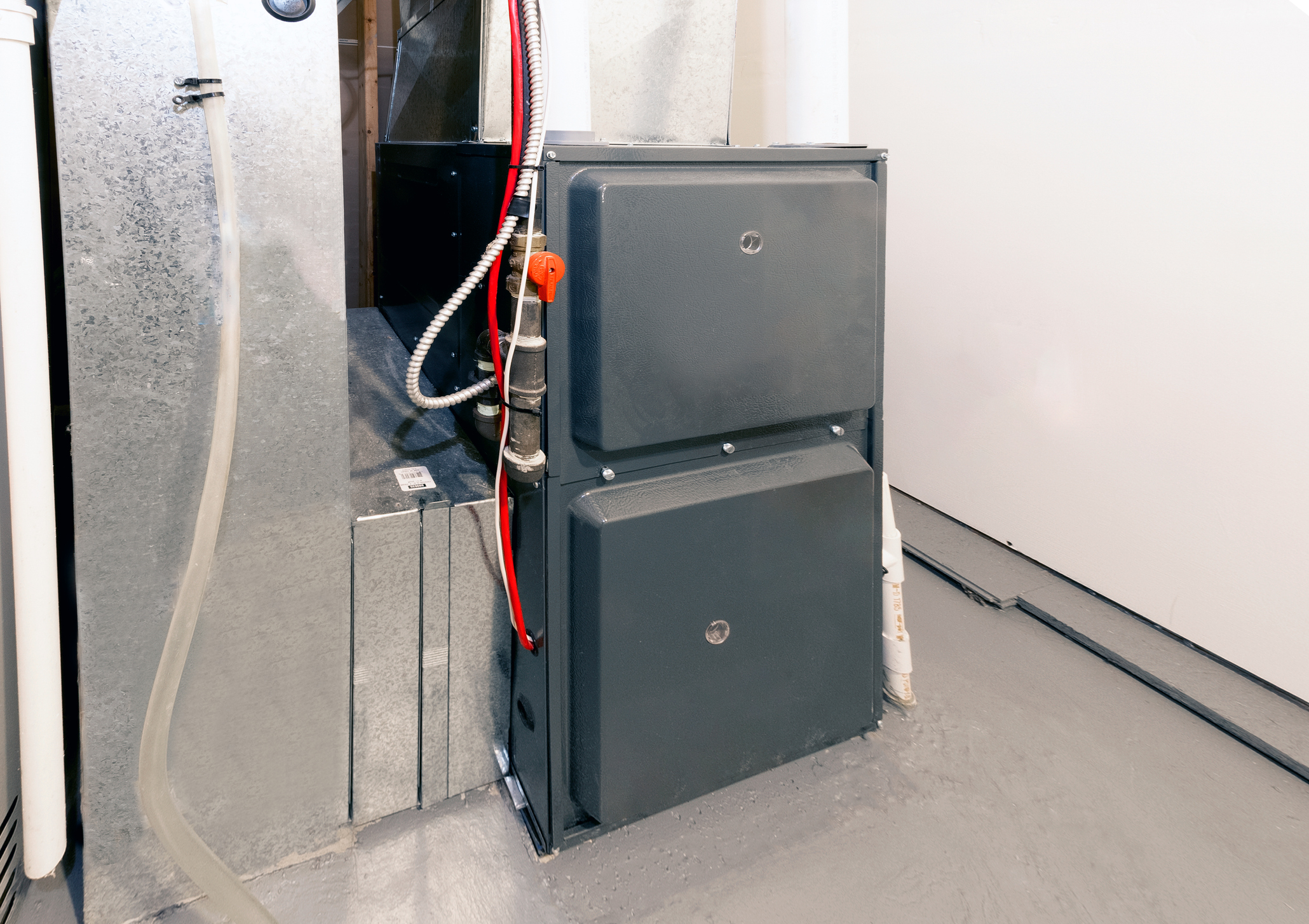
Understanding the Furnace Heating Process
Before diving into troubleshooting, it helps to understand how a furnace works. At a basic level, a furnace takes fuel (natural gas, propane, or oil) and converts it into heat. That heat is then transferred to air, which is circulated throughout your home by a blower fan. Some key parts of your furnace include:- Burner: Ignites the fuel to produce heat.
- Heat Exchanger: Transfers heat from combustion to the air without letting combustion gases mix with the household air.
- Blower Fan: Circulates warm air through your ductwork into your home.
- Thermostat: Signals the furnace when to turn on or off based on the temperature setting.
Common Reasons Your Furnace Is Blowing Cold Air
Dirty Furnace Filter
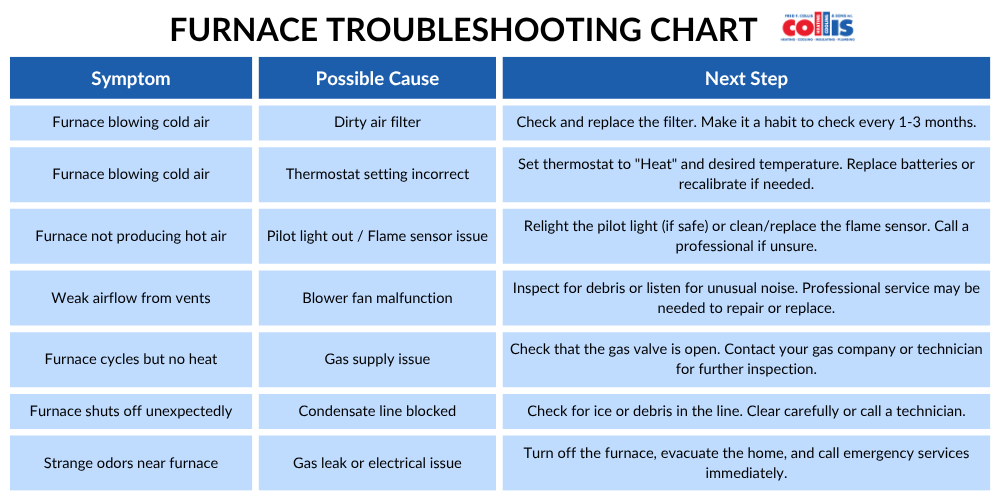
A clogged air filter is one of the most common reasons a furnace blows cold air. When the filter is full of dust and debris, airflow is restricted, and the heated air struggles to move through your ducts, leaving your home feeling chilly. How to check and replace your filter:- Turn off your furnace.
- Locate the filter compartment (often near the blower).
- Remove the filter and inspect it. If it looks dirty or clogged, replace it with a new one.
Thermostat Issues
Sometimes, the problem isn’t the furnace itself but the temperature control. If the thermostat’s heat setting is too low or malfunctioning, your furnace may not start its heating cycle properly. Tips for thermostat troubleshooting:- Make sure it’s set to “Heat” mode and at the desired temperature.
- Replace batteries if your thermostat is battery-operated.
- Recalibrate or replace it if it consistently reads the wrong temperature.
Pilot Light or Flame Sensor Problem
In gas furnaces, a pilot light that has gone out or a dirty flame sensor can stop the furnace from producing heat. Without a flame, the furnace cannot safely ignite the gas, resulting in cool air being pushed into your home. Steps to fix:- Check if the pilot light is lit.
- If out, follow the manufacturer’s instructions to relight it or call a professional.
- Clean or have the flame sensor replaced if the furnace still doesn’t produce hot air.
Gas Supply Issues
A furnace relies on a steady gas supply to produce heat. If the gas pressure is low or the gas valve is closed, your furnace may fail to ignite, leaving your home with cold air. Always verify that the gas valve is open, but do not attempt to fix gas supply issues yourself. If you suspect a problem with your gas line or pressure, contact your utility company or a professional technician. Our team at Fred F. Collis & Sons can safely inspect your gas supply and get your furnace heating properly again.Blower Fan Issues
The blower fan circulates warm air through your home. If it’s malfunctioning or clogged with debris, even a fully functioning furnace can push cold air. Signs of blower fan problems:- Weak airflow from vents
- Strange noises when the furnace is on
- Uneven heating in rooms
Malfunctioning Heat Exchanger
The heat exchanger transfers heat from the burner to the air. If it cracks or malfunctions, the furnace may run but fail to produce warm air. This is a more serious issue that usually requires professional furnace repair. Attempting to operate a furnace with a faulty heat exchanger can pose safety risks, including exposure to carbon monoxide.Less Common Causes
Low Coolant Levels
For hydronic or dual heating systems that rely on a coolant reservoir, low coolant levels can prevent your furnace from heating properly.- Check the coolant temperature gauge if your system has one.
- Refill the coolant to the recommended level if low, following the manufacturer’s instructions.
Condensate Line Blockage
Some modern furnaces have a condensate line to remove excess water. A blockage in this line can stop the furnace from completing its heating cycle.- Inspect the line for clogs or ice build-up.
- Clear the line carefully or call a professional if the blockage persists.
Seasonal Furnace Care Tips
Before Summer (for homes with dual heating and cooling systems):
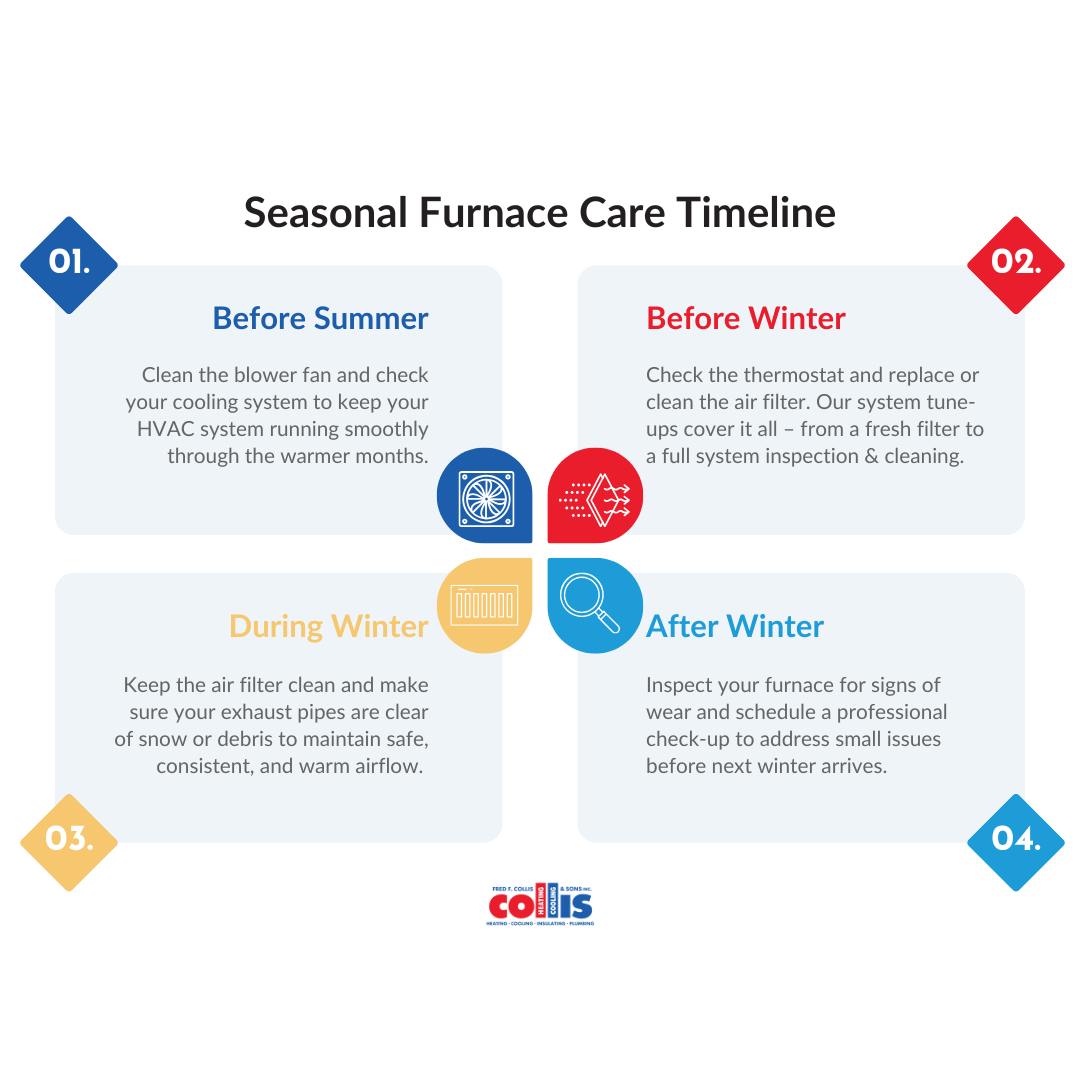
Take time to clean the blower fan and inspect your cooling system. Dust, dirt, and debris can accumulate over the winter months, making it harder for the fan to move air efficiently. Checking your cooling system now helps it run smoothly during warmer months and prevents problems when you switch between heating and cooling. A little preparation now can save you from bigger issues later.Before Winter:
Before the temperatures drop, it’s important to make sure your furnace is ready to work. During a professional tune-up, your system will be inspected, the air filter cleaned or replaced, thermostat settings verified, and all components checked for proper operation. This simple preparation keeps your home comfortable all season, with the help from our trusted team at Fred. F. Collis & Sons.During Winter:
Keeping the air filter clean is more important than ever during the winter because restricted airflow can make your home uncomfortable and put extra strain on the blower fan. At the same time, check that exhaust pipes and vents are clear of snow, ice, or debris. Blocked exhaust pipes can interfere with the furnace’s operation and even cause safety hazards. Staying on top of these small tasks helps your heating system deliver consistent warm air throughout your home.Post-Winter:
After winter, it’s helpful to inspect your furnace for any maintenance issues or signs of wear that may have developed during the cold season. Look for unusual noises, uneven heating, or minor leaks. Scheduling a professional check-up at this time allows a technician to address small problems before they grow into larger, more expensive repairs.How to Prevent Your Furnace From Blowing Cold Air
#1 Regular Maintenance & Annual Checkups
Scheduling regular furnace maintenance is the best way to prevent small issues from becoming major repairs. During a professional tune-up, a technician from Fred F. Collis & Sons will inspect key components, clean internal parts, test the blower fan, and ensure the heating elements are working properly.#2 Replace the Air Filter Regularly
Check your air filter every 1-3 months. A clean filter allows warm air to flow freely and reduces strain on the furnace.#3 Check the Thermostat Settings
Make sure your temperature control is set correctly. Replace batteries if needed, and recalibrate or replace a malfunctioning thermostat.Furnace Safety Tips
- Gas Leaks: If you smell gas, turn off the furnace, leave the house, and call emergency services immediately.
- Electrical Safety: Always turn off the power before inspecting electrical components.
- Carbon Monoxide Concerns: Install a CO detector near the furnace and throughout your home if you use a gas furnace.