The short answer? A little condensation now and then might not be cause for alarm. But persistent or heavy moisture on your HVAC ductwork often signals an underlying issue that deserves attention.
What Causes Condensation on Ductwork?
Condensation on ductwork happens for the same reason a cold glass of lemonade “sweats” on a humid summer day. When warm, moist air comes into contact with a cold surface, the moisture in the air turns into liquid water droplets.The Science Behind Duct Sweating
When your air conditioner runs, it pushes cold air through your duct system. This causes the surface of your ducts (especially metal ducts) to become quite cold. If those ducts pass through an unconditioned attic, crawl space, or basement, they’re surrounded by warm air and humid air.When the temperature of the duct surface drops below what’s called the dew point, condensation forms. The greater the temperature difference between the cold ducts and the surrounding air, the more moisture you’ll see. This is why duct sweating tends to be worse during hot, humid summer months when your AC is working hardest.
Common Contributing Factors
Several conditions can make duct condensation more likely or more severe:- High indoor humidity: When there’s excess moisture in your home, the humidity level rises and increases the chance of condensation forming on cold surfaces.
- Poor or missing duct insulation: Uninsulated metal ductwork loses temperature quickly, making the surface colder and more prone to sweating.
- Ductwork in unconditioned spaces: Ducts running through attics, crawl spaces, and basements are exposed to greater temperature swings and higher humidity.
- Leaky ducts: Gaps and holes in your ductwork allow humid air to enter the system or let conditioned air escape, creating temperature imbalances.
- Inadequate vapor barrier: A missing or damaged vapor barrier around insulation lets moisture reach the duct surface.
- Clogged air filter: A dirty filter restricts airflow, which can cause your system to run inefficiently and create temperature inconsistencies.
- Oversized AC unit: An air conditioner that’s too large for your home cools the air quickly but doesn’t run long enough to remove humidity properly.
Is Condensation on Ductwork a Problem?
Occasional, light condensation isn’t always a major concern. However, if you’re noticing persistent moisture, water dripping from your ducts, or wet insulation around your ductwork system, it’s time to investigate further. These signs often point to HVAC issues that can lead to bigger problems.When Condensation Becomes a Concern

Watch for these warning signs that indicate your duct condensation has become a more serious issue. If you’re experiencing any of these symptoms, the condensation problem likely needs professional attention.
- Water dripping from ducts onto ceilings, floors, or stored belongings
- Visibly wet insulation wrapped around your ductwork
- Musty or moldy odors near your HVAC ducts
- Recurring ceiling leaks that don’t seem connected to your roof
- Staining or discoloration on walls and ceilings near supply vents
Risks of Ignoring Ductwork Condensation
It might be tempting to dismiss a little moisture on your ducts as no big deal. But leaving a condensation issue unaddressed can lead to expensive repairs and even health concerns for your family.Mold and Mildew Growth
Moisture creates the perfect environment for mold and mildew to thrive. When condensation lingers on your ductwork, mold can begin growing on the ducts themselves, on nearby insulation, and on surrounding building materials like drywall and wood framing.What makes this especially concerning is that mold spores can circulate through your HVAC system and spread throughout your home. This affects your indoor air quality and can cause health issues for family members. If you notice musty smells or see any signs of mold near your ducts, it’s worth having your indoor air quality evaluated.
Structural and Property Damage
Over time, persistent moisture from duct sweating can cause real damage to your home. Wood framing can warp or rot. Drywall can become stained, soft, or crumbly. Metal ductwork can corrode and develop holes.Wet insulation is another concern. Once insulation becomes saturated, it loses its effectiveness and often needs to be replaced entirely. The longer water damage goes unaddressed, the more costly the repairs become.
Reduced HVAC Efficiency
Excess moisture in and around your ducts forces your HVAC system to work harder than it should. Your air conditioner has to combat both the heat and the humidity, which increases energy consumption and drives up your utility bills. This added strain also shortens the lifespan of your equipment.How to Fix Condensation on Ductwork
The good news is that most duct condensation problems can be solved with the right approach. Depending on the cause, solutions range from DIY adjustments to professional repairs.Improve Duct Insulation
One of the most effective ways to stop ductwork sweating is to add or upgrade the insulation around your ducts. Proper insulation creates a barrier between the cold metal ductwork and the warm, moist air surrounding it.Focus on any ducts running through unconditioned spaces like your attic, crawl space, or basement. The insulation should include a vapor barrier on the outside to prevent moisture from reaching the duct surface. If your current duct insulation is old, thin, or damaged, upgrading to higher-quality insulation can make a noticeable difference.
For homeowners in Central New York, Fred F. Collis & Sons offers professional insulation services including attic insulation, basement insulation, spray foam, and blown-in cellulose options.
Control Indoor Humidity Levels
Keeping your home’s humidity level in check is another effective strategy. The ideal relative level for most homes falls between 30% and 50%. Staying within this range helps prevent condensation while keeping your home comfortable.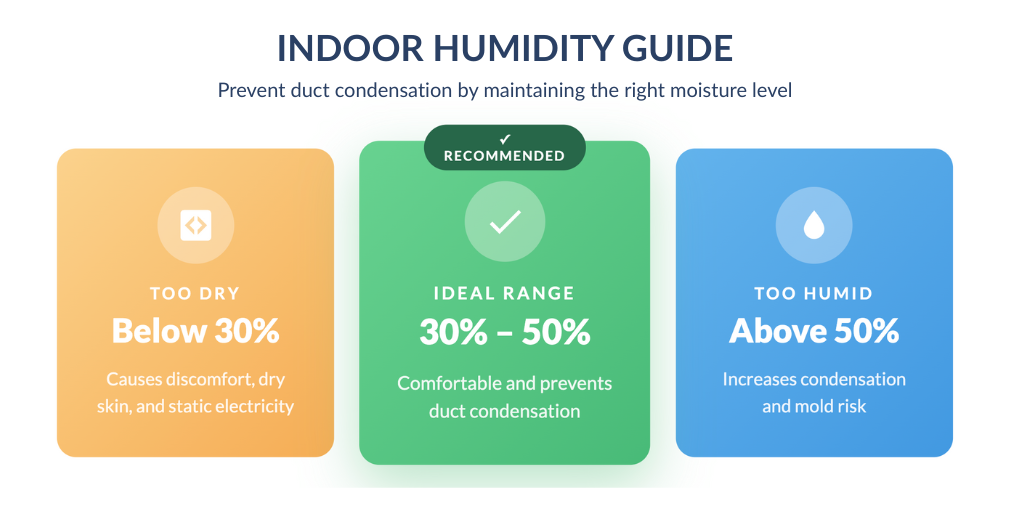
If your home tends toward high indoor humidity, consider using a dehumidifier in problem areas. For whole-home humidity control, a steam humidifier system can help you maintain balanced moisture levels year-round. Also make sure bathrooms and kitchens are properly ventilated, and check for any sources of water intrusion that might be adding excess moisture to your home.
Seal Duct Leaks
Leaky ducts are a common culprit behind condensation problems. When your ductwork has gaps or holes, conditioned air escapes and humid air from surrounding spaces gets pulled in. This creates the temperature differences that lead to sweating.Professional duct sealing closes these gaps, improving both efficiency and moisture control. If it’s been a while since your ducts were inspected, scheduling duct cleaning and maintenance is a smart move.
Schedule Regular HVAC Maintenance
Annual maintenance is one of the best ways to catch condensation issues before they turn into bigger problems. During a tune-up, a technician will check your duct insulation, inspect seals and connections, verify proper airflow, and assess humidity control.Don’t forget about your air filter, either. A clogged filter restricts airflow and can contribute to temperature imbalances in your system. Check your filter monthly and replace it as needed (typically every one to three months depending on your household).
Check Your System Sizing
If you’ve addressed insulation, humidity, and duct sealing but still have a condensation problem, your air conditioner itself might be the issue. An oversized AC unit cools your home too quickly. It shuts off before running long enough to properly dehumidify the air, leaving you with a cold but clammy home and sweaty ducts.If you suspect your system might be oversized or if it’s aging and due for replacement, a technician can evaluate your setup and recommend the right solution. Learn more about AC replacement options from Fred F. Collis & Sons.
When to Call an HVAC Professional
Some condensation issues can be managed with DIY improvements like changing your air filter or running a dehumidifier. But other situations call for professional expertise.Consider calling an HVAC technician if you’re dealing with:
- Persistent duct sweating that doesn’t improve with basic fixes
- Visible mold growth on or near your ductwork
- Water damage to ceilings, walls, or flooring
- Unexplained spikes in your energy bills
- Ducts located in hard-to-reach areas like attics or crawl spaces
Trust Fred F. Collis & Sons for Your Ductwork Needs
If you’re a homeowner in Central New York or the Mohawk Valley dealing with condensation on your ductwork, the team at Fred F. Collis & Sons is here to help. We’ve been providing home comfort solutions to the region since 1936, and our NATE-certified technicians are trained to handle all types of HVAC issues.Our services that help address duct condensation include duct cleaning, whole-home insulation upgrades, indoor air quality solutions, and AC repair and replacement.
With offices in Yorkville and Syracuse, we’re your neighbors, and we treat your home like we’d treat our own. Every installation comes with our satisfaction guarantee, and we’re always upfront about pricing with no surprise fees.
Contact us today to schedule an inspection or request a free estimate. When it comes to home comfort, you can always Count on Collis.