It’s understandable why some homeowners are skeptical. The question keeps coming up because older heat pumps lost capacity early and handed the heating load over to backup heat. Today’s cold-climate heat pumps use more advanced technology to perform in much colder conditions. The right system comes down to matching the heat pump to the home and how much heat that home actually needs on the coldest days.
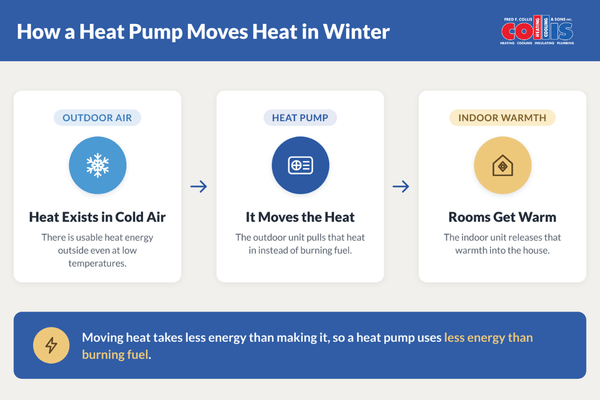
How a Heat Pump Moves Heat Energy in Winter
Unlike a traditional furnace, a heat pump never creates heat. Instead, it moves heat energy that is already in the outdoor air into the house, which is a different process than burning fuel.Heating Mode and Cooling Mode in One System
In summer, the system pushes heat out of the house, providing cooling. In winter, the refrigerant cycle reverses. The outdoor unit pulls heat energy out of the outside air, and the indoor unit releases that warmth into the rooms.One system handles both heating and cooling, meaning a heat pump can potentially replace the need for separate heating and air conditioning equipment.
Why Transferring Heat Cuts Energy Use
A gas furnace burns fuel to create heat, while a heat pump simply relocates heat that already exists. There is usable heat energy in outdoor air even at low temperatures, which is why the process keeps working in winter.Moving heat generally takes less energy than making it, which is where heat pumps get their energy efficiency advantage over traditional heating systems.
Why Older Heat Pumps Earned a Bad Reputation in Colder Climates
If you’ve heard that heat pumps don’t work well in cold weather, that concern likely comes from older equipment. Older units were built for warmer regions. Their single-speed compressors ran at one output, and heating capacity fell off fast once the outdoor temperature dropped.As a result, these systems often relied on backup heat earlier in the winter, which could drive up energy costs.
That experience is why homeowners still assume a heat pump quits in extreme cold. Equipment built for a colder climate performs differently, and the specifications back it up.
What Makes a Cold Climate Heat Pump Different
Modern cold-climate heat pumps use variable-speed inverter compressors that adjust their output based on your home’s heating needs. This lets the system match its output to what the house needs at that moment. Improved refrigerant control and coil design hold more heating capacity at lower temperatures.Cold climate models also carry published performance data at specific outdoor temperatures. A contractor uses those numbers to match equipment to the home’s heating load instead of guessing.
| Feature | Standard heat pump | Cold climate heat pump |
|---|---|---|
| Compressor | Single-speed, on or off | Variable-speed inverter |
| Heating capacity as outdoor temperature drops | Falls off early | Holds a larger share of capacity |
| Backup heating system use | Takes over sooner | Runs as primary heat much further down |
| Performance at extremely low temperature | Limited | Rated and documented for sub-zero temperatures |
| Best fit | Mild winter regions | Cold climate regions like Central New York |
Do You Still Need a Backup Heating System?
Not always. The answer depends on the equipment, the home, and how much of the coldest weather the heat pump is sized to cover. Both setups below are common across Central New York.Dual Fuel Setups
Pairing a new heat pump with an existing gas furnace or boiler gives efficient heating most of the season and a familiar backup for extreme temperatures. Our team at Fred F. Collis & Sons calls this a dual-fuel or hybrid setup, and the backup takes over during the coldest stretches of the heating season.Homes with existing boilers may also be able to use a heat pump alongside their current heating system, although the equipment and controls may operate separately.
This approach appeals to homeowners who are not ready to retire equipment that still has life left in it. The heat pump handles the bulk of the winter, and the furnace or boiler covers the rest.
Standalone Heat Pump Systems
Several homes across New York State now run a heat pump system as their primary heating source. Some homes can rely on the heat pump alone once insulation and air sealing inadequacies are addressed.For homes with drafts or poor insulation, making energy efficiency improvements before installation is necessary for a heat pump to perform more effectively. A free home energy assessment can identify where improvements may be needed.
Ductless heat pumps are especially useful in homes without existing ductwork. Each indoor unit controls its own zone, which allows room-by-room temperatures in older houses, finished basements, additions, and certain rooms that never quite keep up.
What Affects Heat Pump Performance in Cold Weather
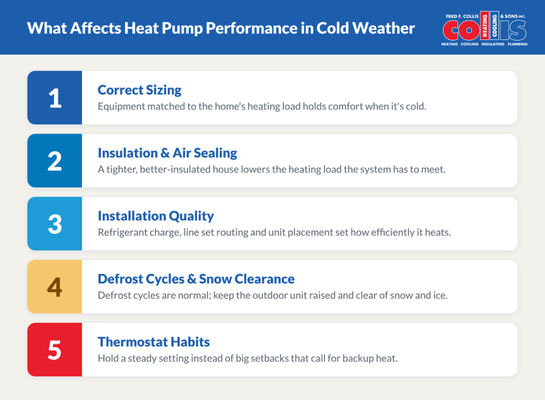
Five things decide how well a heat pump holds up once the temperature drops, and most of them come down to how the system was sized and installed.Correct Sizing
A heat pump needs to match your home’s actual heating requirements to maintain comfortable temperatures throughout winter. A system that’s too small may struggle during extreme cold, while an oversized system can create efficiency and comfort issues.Proper sizing starts with evaluating the home itself, including its size, insulation, existing heating equipment, ductwork, and potential sources of air leakage.
Insulation and Air Sealing
A leaky, under-insulated house raises the heating load and makes any system work harder in winter temperatures. Adding attic insulation and air sealing before an installation often allows for a smaller, less expensive system that performs better.Installation Quality
A high-efficiency heat pump only delivers on its rating when it’s installed correctly. Refrigerant charge, line set routing, outdoor unit placement, and system controls all affect how efficiently the equipment heats your home.Variable-speed systems also need to be configured to the manufacturer’s specifications and paired with the matching control. A factory-authorized installation team matches the equipment to your home and sets it up to run the way it was designed.
Defrost Cycles and Snow Clearance
Central New York winters bring plenty of snow and ice. Heat pumps are built to keep running through both. When frost forms on the outdoor unit, the system automatically runs a short defrost cycle to melt it away. This is a normal part of operation and doesn’t mean anything is wrong.The outdoor unit also needs room to pull in air, so it should be mounted above typical snow accumulation and kept clear of drifts and ice all winter.
Thermostat Habits
Heat pumps work most efficiently when the indoor temperature stays fairly steady. Turning the thermostat way down and then back up can make the system use backup heat to catch up. This uses more energy than the heat pump does on its own.Keeping a steady, comfortable setting usually avoids that extra cost, though the best approach depends on your system and thermostat. Annual maintenance keeps the equipment and controls working properly throughout the heating season.
Heating Costs Compared to Traditional Heating Systems
One of the biggest questions homeowners have about heat pumps is how much they’ll cost to operate.Heat pumps run on electricity, so your electric bill will increase after installation. However, if you’re switching from oil, propane, or natural gas, you’ll also reduce or eliminate fuel costs.
Homes switching off electric baseboard heat, fuel oil, or propane see the biggest drop in what they spend to heat.
Another benefit is that the same heat pump provides cooling during summer. That means you can enjoy year-round comfort without relying on a separate air conditioning system.
New York Rebates That Lower the Upfront Cost
Installing a new heat pump is an investment, but New York State and participating utilities offer incentives that can help reduce the upfront cost.Available rebates depend on factors such as your utility provider, household income, selected equipment, and installation type. Qualifying equipment must also meet the applicable program requirements, including cold-climate performance standards where required.
As a participating contractor, Collis can help customers access utility-sponsored rebates. You can explore our list of rebates and incentives to see what savings may be available.
Count on Collis for Cold Weather Heating
With the right equipment and professional installation, a cold-climate heat pump can keep your Central New York home comfortable year-round.Fred F. Collis & Sons has been family-owned since 1936, with offices in Yorkville and Syracuse. Our team is an an ENERGY STAR Partner, BBB and BPI-accredited, and a NYS Clean Heat participating contractor.
Each heat pump project begins with a free home energy assessment or free estimate to identify the home’s heating needs so the system can be sized to match. Ongoing service plans are available to keep that equipment running at its rated performance year after year.
Collis serves Utica, Rome, Syracuse, and the greater Mohawk Valley. See the full list of service areas, call 315-768-2323, or request a callback to talk through a heat pump for your home.