Below, we explain how backup generators work and what to consider before you buy.
Why Power Outages Hit Central New York Homes
Our area sees plenty of weather that can take down the grid, from heavy snow and ice in winter to summer thunderstorms. Most outages are short, but the ones that are not can cause real problems, especially in the cold:- No heat when temperatures drop below freezing
- Spoiled food in the refrigerator and freezer
- A flooded basement if the sump pump stops
- No way to charge phones or run medical devices
What Is a Backup Generator?
A backup generator is a machine that converts fuel into electricity when utility power is unavailable. When the grid goes down, the generator steps in and supplies power to your home.Homeowners rely on backup power to stay safe and comfortable in weather they cannot control. The two main types go about that job in different ways.
Standby Generators vs. Portable Generators
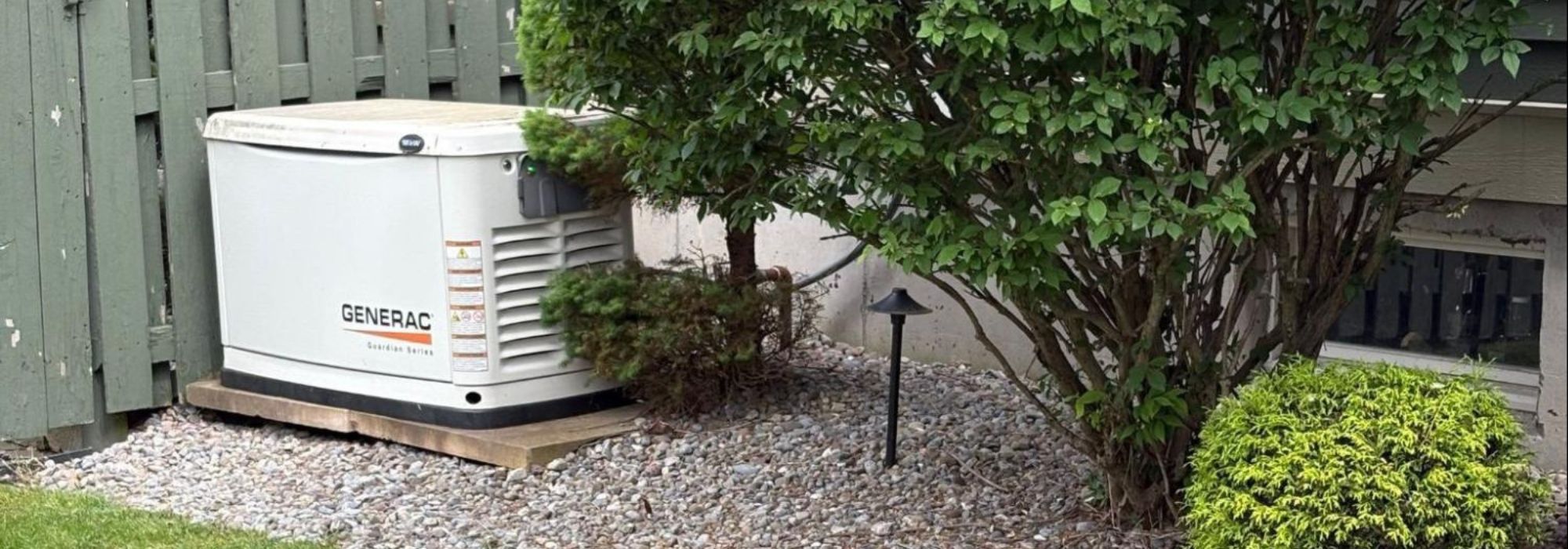
Standby and portable generators differ in a few key ways.A standby generator is permanently installed outside your home and wired directly into your electrical system. It starts automatically and runs on natural gas or propane, powering key circuits or the whole house.
A portable generator needs manual setup, gets moved into place as needed, and runs on gasoline, connecting by extension cord to a few appliances at a time.
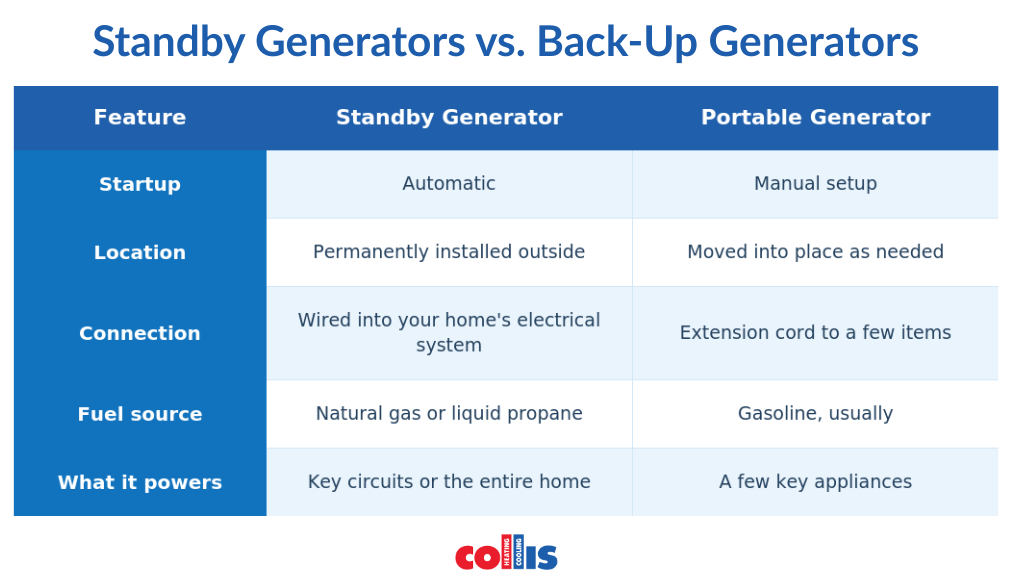 For steady backup power with the least hands-on effort, standby residential backup generators offer the most convenience.
 How Does a Backup Generator Work?
Here is the question most homeowners really want answered: how does a generator turn fuel into electrical power for the house? With a standby system, it happens in a quick sequence you never have to manage.- The power goes out. Utility power stops flowing to the home.
- The transfer switch reacts. The automatic transfer switch continuously monitors utility power and detects the moment service is interrupted.
- The engine starts. The internal combustion engine kicks on within seconds.
- Fuel becomes power. The engine burns fuel to spin an alternator, which produces electricity for the home.
- Your home gets power. Electricity routes to the home’s electrical panel and out to the chosen circuits.
- Normal service returns. When utility power comes back, the system switches to the grid, and the generator shuts down.
 With a standby system, the whole process is hands-off. You do not have to be home, awake, or even aware that the power blinked out.
 What the Automatic Transfer Switch Does
The automatic transfer switch is the brain of the setup. It watches utility power around the clock and signals the generator to start when the grid fails and to stop when service returns.It also does something important for safety: it keeps generator power completely separated from the utility grid. That separation protects line workers repairing the outage and shields your own equipment when power is restored.
Standby Mode and Self-Testing
Between outages, a standby generator sits quietly in standby mode, ready to go. Most units also run scheduled self-tests, briefly exercising the engine so the system is ready when the next storm hits rather than sitting untested for months.What Fuels a Backup Generator?
Standby generators typically run on one of two fuel sources, and the right one depends on what is already available at your home. Natural gas means there is no fuel to refill, since it feeds straight from the street. Propane suits homes without a Natural Gas line to draw off of, instead drawing from a tank on the property. Your installer can help you weigh the choice based on what is already at your home.
 What Can a Backup Generator Power in Your Home?
How much your generator can run depends on its size and how it is set up. Some units cover a handful of key circuits, while larger systems power the entire home. Commonly backed-up items include:- Heating and air conditioning
- The refrigerator and freezer
- Sump and well pumps
- Lights and outlets
- Security systems
- Medical devices
- Phones, computers, and other electronic devices
Staying Safe Around Generators
Generators are safe when used correctly, but they carry real risks worth taking seriously.Carbon monoxide is the biggest one. The gas is invisible and odorless, so you should never run a generator in a garage, basement, or any enclosed space, even with a door open.
This is one more area where a standby unit offers an advantage. Running extension cords across a snowy yard is awkward and can be unsafe, while a permanently installed standby unit sits outside and wires directly into your home’s electrical system. For more on staying safe during an outage, the Ready.gov power outage guide is a helpful resource.
Why Professional Generator Installation Matters
Installing a generator is more than setting a machine on a pad. It means sizing the unit to your home’s electrical load, tying it into the electrical panel, connecting a fuel source, and meeting local permits and codes.Fred F. Collis & Sons provides expert generator contractor services, with technicians specially trained to install the high-quality generators we carry. Our team is here to help homeowners pick the right model for their home or the camp. You can learn more on our generator installation page or see everything we offer on our products and services page.
Keeping Your Generator Ready with Regular Maintenance
A standby generator does its best work when it gets a little attention each year. Annual service keeps the engine, battery, and transfer switch in good shape.Skipping maintenance is the most common reason a standby generator fails during an outage. A yearly check is insurance against a dark, cold night with a unit that will not start.
Count on Collis for Backup Power
A backup generator puts you in control of your home’s power supply, even when the rest of the neighborhood is dark. Now that you know how these systems work, you can decide what kind of coverage fits your household.When you are ready to take the next step, the team at Fred F. Collis & Sons is here to help. Contact us for a free estimate, and we will walk you through your options. Trusted in Central New York since 1936, you can always count on Collis.