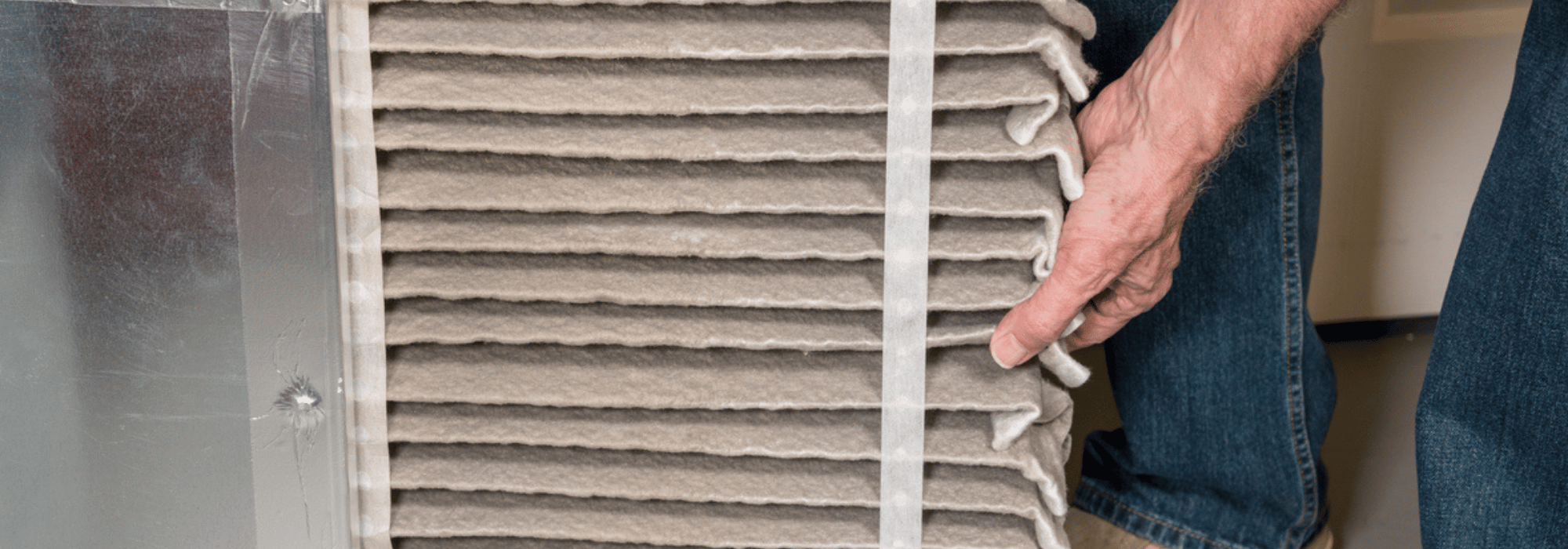
How often you need to change your filter depends on the type of filter, the household it serves, and how much the system runs through the year. During cold Central New York winters, your furnace works harder to keep your home warm, which means you may need to change the filter more often.
How Long Does a Furnace Filter Last?
How often a residential furnace needs a fresh filter comes down to filter thickness, the household, and how much the system runs. Most 1-inch filters generally last one to three months, while thicker 4 to 5-inch media filters stretch to six to twelve months.Thinner filters tend to clog faster and need swapping more often than thick, high-capacity media. A basic 1-inch fiberglass filter is usually a monthly change, and a 1-inch pleated filter runs closer to two or three months. You may also need to replace your filter more frequently if you have pets, allergies, or use your heating and cooling system heavily.
The ranges are a starting point, not a hard rule. The best way to know for sure is to pull out the filter and check it. Make it a habit to inspect your filter once a month. Hold the filter up to a light to see how much passes through. When the material looks loaded and light barely gets through, it is time for a replacement.
| Filter type/thickness | Typical replacement window | Best suited for |
|---|---|---|
| 1-inch fiberglass filter | Shortest interval | Budget, light-use homes |
| 1-inch pleated | Short interval | Average homes |
| 3 to 4-inch pleated | Longer interval | Homes wanting better filtration |
| 5-inch high-efficiency pleated | Longest interval | Homes with allergies or pets |
What a Furnace Filter Actually Does
A furnace air filter, sometimes called an HVAC filter, traps airborne particles, basic dust, pet dander, and fine particles before they recirculate through the home. Without that barrier, the same dust and allergens cycle through the ductwork over and over, settling on surfaces and floating back into the air every time the system runs.That same air filter also protects your equipment. It keeps dust and dirt from building up on the blower and air handler. When those parts stay clean, the system moves air the way it should and avoids the wear and tear that leads to early repairs. A clean filter gives you cleaner air, better indoor air quality, and a system that lasts longer.
What Affects How Often You Should Change It
Several factors decide whether a filter needs changing sooner or can last longer. Pets, allergies, the size of your home, and how often your system runs all play a part in how fast a filter fills up. A filter that lasts three months in one home might need changing every month in another. The ones below matter most.Pets in the Home
More pet dander and hair load the filter faster and shorten the interval between changes. Homes with several animals often replace the filter twice as often as homes with none.Allergies and Indoor Air Quality Needs
If someone in your home has allergies, changing your filter more often can help reduce airborne dust and allergens. A Trion Air Bear filter is a strong choice for these households, since basic smaller filters mostly protect the equipment while a Trion Air Bear works to improve your indoor air quality.Filter Type and Thickness
Thicker filters generally last longer than basic 1-inch fiberglass filters. They have more surface area to collect dust and debris before becoming clogged.How Much You Run the System
The more you run your heating and cooling system, the faster your filter collects dust. During cold New York winters, your furnace runs more often to keep your home warm. If your air conditioner uses the same filter, it will also collect dust throughout the summer.Home Environment
Dust levels, recent remodeling, and smoke all speed up buildup. A home near construction or with a wood stove loads filters faster than an average household.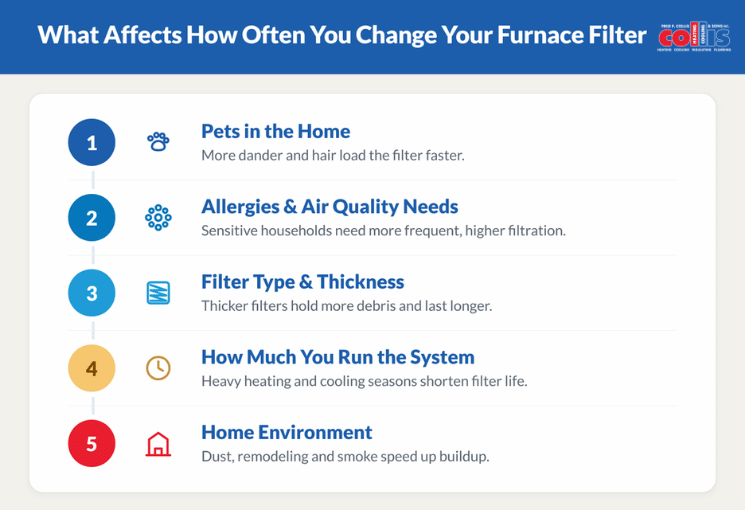
Understanding Furnace Filter Types and Ratings
Every filter carries a filter performance rating, measured on the MERV scale, that shows how much it captures. The higher the MERV rating, the smaller the particles the filter can capture. However, filters with higher ratings can also make it harder for air to flow if it’s not fitted properly to your system.The best option for your home is one that cleans the air well without restricting the airflow your system needs to run properly. True high-efficiency particulate air (HEPA) filters are too dense for most furnace filter slots, so they usually need a dedicated whole-home unit instead.On the furnaces we install, we add an Air Bear media cabinet that holds a deeper, higher-rated filter, which lets a high-efficiency Trion Air Bear do real work on your air quality without choking the airflow a standard slot would.
| Filter type | Filter performance rating (MERV) | What it captures | Typical lifespan |
|---|---|---|---|
| Fiberglass filter | Low | Large debris | Shortest |
| Pleated | Mid | Dust, pollen, pet dander | Moderate |
| High-efficiency pleated | High (up to MERV 13) | Fine particles, mold spores, smoke | Longer |
Will a Higher-Rated Filter Raise My Energy Bills?
A higher-rated filter can raise your energy bills if it restricts airflow more than your system is designed to handle. When the right filter is installed in the right cabinet, airflow stays steady, and your system can continue running efficiently.The problem comes from a poor fit, not the rating itself. A filter forced into a space it does not match creates airflow resistance and makes the blower work harder, which is what draws more power.
For example, a properly fitted Trion Air Bear filter, typically MERV 11 or MERV 13, traps particles as small as one micron. Its deep five-inch pleats hold more dust and allow air to flow freely through the system. The result is cleaner air, strong filtration, and a longer stretch between changes.
Signs It’s Time to Change Your Filter
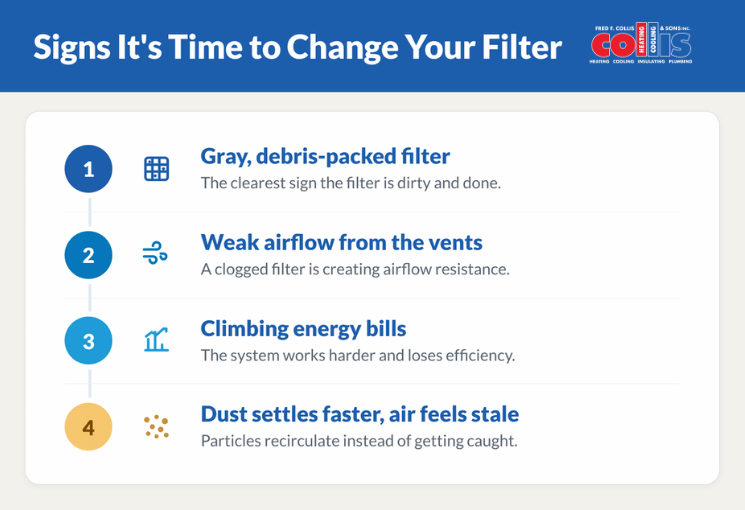
A few clear signals mean the filter has done its job and needs replacing.- A gray, debris-packed filter is the clearest sign of a dirty filter.
- Weak vent airflow means a clogged filter is creating airflow resistance.
- Energy bills climb as the system works harder and loses energy efficiency.
- Dust settles faster around the home, and the air feels stale.
What Happens If You Skip Filter Changes
Letting a filter go too long puts strain on the whole system. A clogged filter forces the furnace, air handler, and cooling system to work against resistance they were never designed for. Energy efficiency drops and the risk of a breakdown rises as the equipment fights for airflow. In the worst cases, restricted airflow causes a furnace to overheat and shut down on its safety limit. During cooling season, it can also let the evaporator coil freeze. Both lead to service calls that a simple filter change would have prevented.When Professional Guidance Can Make a Difference
Choosing a furnace filter involves more than grabbing one off the shelf. The size has to match the filter slot exactly, and the filter performance rating has to suit what the blower can handle. If either one is off, airflow can suffer.A trained technician checks both during a routine maintenance visit. They confirm the right size and rating for the system, inspect the filter for buildup, and spot early signs of airflow problems before they lead to repairs. An HVAC maintenance plan keeps those checks on a regular schedule, so the filter never goes too long without attention. If dust buildup or allergies are a real concern in your home, a duct cleaning can also make sense, clearing out the debris that collects in the system beyond what any filter catches.
Count on Collis for Cleaner Indoor Air
Fred F. Collis & Sons has served Central New York since 1936, with offices in Yorkville and Syracuse. Our NATE-certified technicians treat your home the way they would treat their own.We handle furnace service, indoor air quality, HVAC filter service, and so much more for homes across Utica, Rome, Syracuse, and the surrounding areas. If you are not sure which furnace filter your system needs or how often to change it, we can take a look during a routine furnace maintenance visit and give you guidance.
Call 315-768-2323 to schedule your furnace service or indoor air quality consultation!