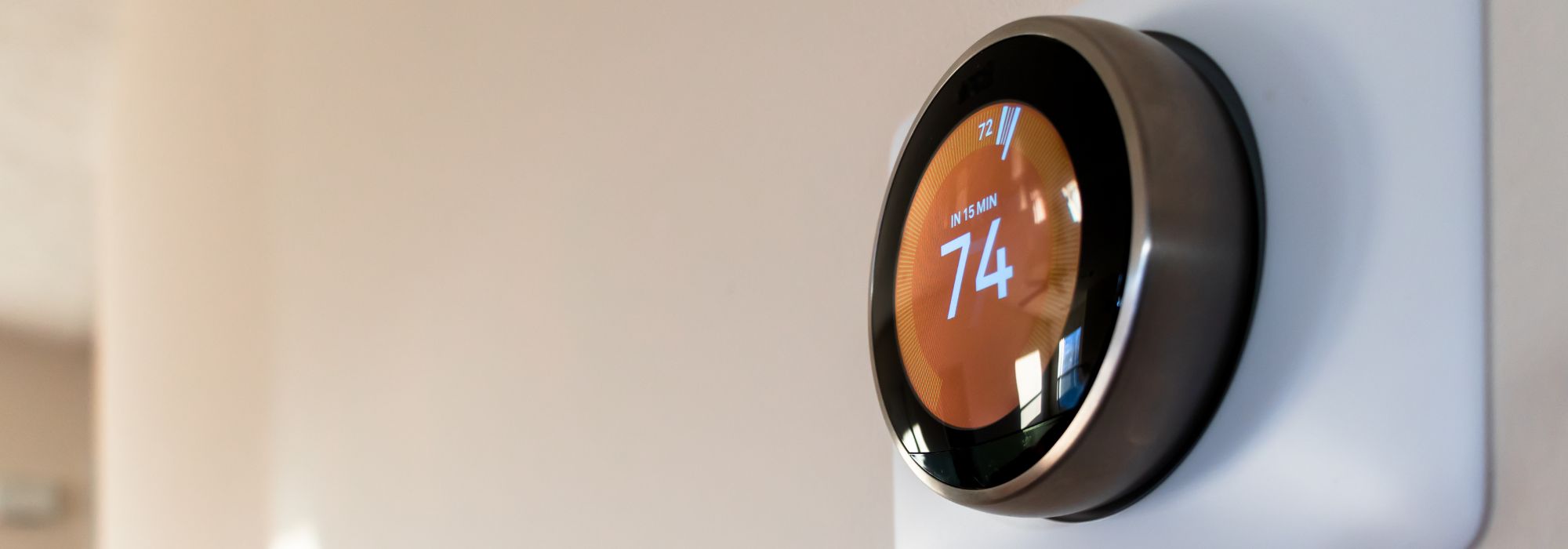
Finding the balance between staying cool and keeping cooling costs reasonable is a summer struggle every homeowner runs into. However, with a few small adjustments, you can keep your home comfortable through the hottest summer months without sending your energy use through the roof.
What’s the Best Temperature to Set Your Air Conditioner in the Summer?
If your main goal is energy savings, the U.S. Department of Energy and ENERGY STAR recommend setting your thermostat to 78°F when you’re home during the day. This setting helps reduce cooling demand while still keeping the home reasonably comfortable for many households.However, 78°F can feel too warm for some families, especially during humid Central New York summers. If day-to-day comfort is the priority, many homeowners prefer a thermostat setting closer to 72°F to 75°F while they are home and awake. That range still feels cool against the extreme heat outside without forcing your AC unit to run nonstop.
The ideal temperature is the one that keeps your home comfortable without forcing your air conditioner to run constantly. For most homes, that means starting around 75°F, then adjusting up or down based on comfort, humidity levels, and energy costs.
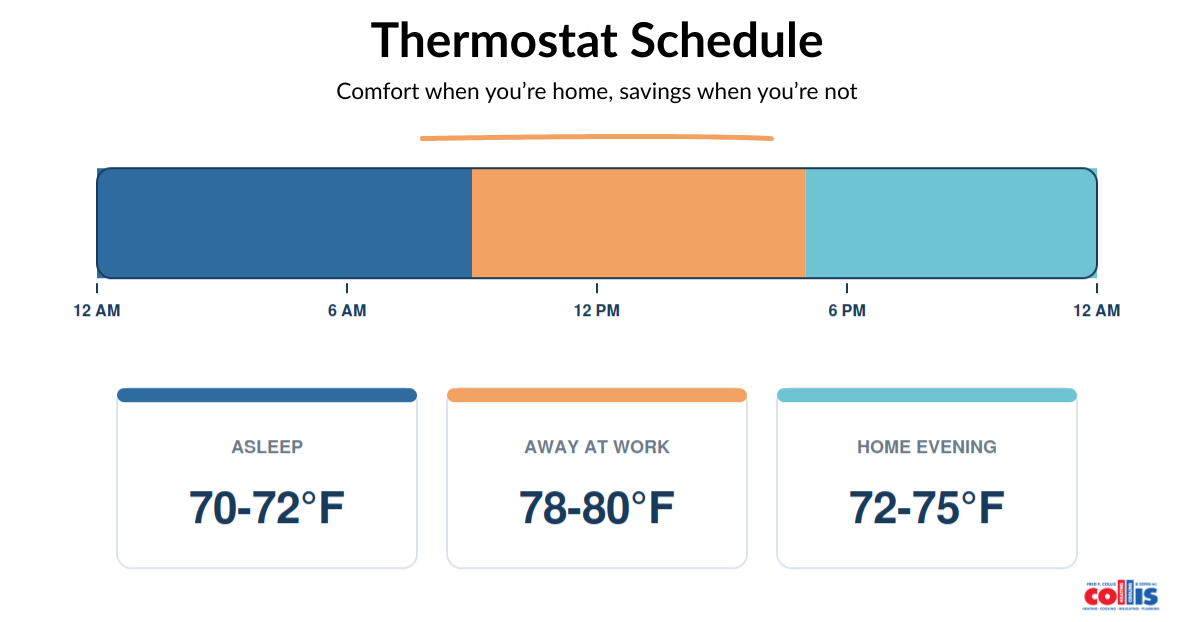
Recommended Summer Thermostat Settings
A good summer thermostat schedule should change based on when you are home, away, or asleep. Keeping one low temperature all day usually wastes energy, especially when the house is empty. Here’s a side-by-side look at how the two approaches compare across different temperatures throughout the day. The right temperature setting for your home may be different depending on your priorities, but the goal is the same: use cooler settings when comfort matters most, then raise the temperature when the home is empty or when fans can help you stay comfortable.
 The Cost of a Cooler Setting
Small thermostat changes can make a noticeable difference over a full cooling season. The Department of Energy notes that homeowners can save as much as 10% per year on heating and cooling by adjusting the thermostat 7°–10°F for 8 hours a day.That does not mean you need to keep your home uncomfortable. It’s a reason to be intentional about when you run the AC at a cooler temperature. Setting a lower number when you’re home and awake makes sense. Holding that same lower temperature when nobody’s home, or when everyone’s asleep under a fan, is where most of the wasted energy cost shows up.
Factors That Change the Right Temperature for Your Home
The comfort-balanced range is a starting point, not a rule. Several variables shift what actually feels comfortable in your home on any given day.Outdoor Temperature and Humidity
The larger the gap between the outdoor temperature and your thermostat setting, the harder your air conditioning system has to work. Humidity also plays a major role. In Central New York, summer air can feel heavy, which makes a 75°F room feel warmer than the number on the thermostat. A properly working AC system helps by removing some moisture from the air as it cools. When humidity is under control, your home can feel more comfortable at a slightly higher temperature.Home Insulation and Air Sealing
If your home loses cool air through the attic, basement, windows, doors, or ductwork, your AC has to run longer to maintain the same temperature. Even a well-tuned AC can struggle if the conditioned air leaks out as fast as the system makes it. Adding attic insulation or air sealing through Collis insulation services can help your home hold a moderate temperature for much longer between cooling cycles.Type of HVAC System
Central air systems, heat pumps, and ductless mini-splits all keep your home comfortable, but they operate in slightly different ways. A heat pump is an energy efficient system that provides both heating and cooling by moving heat in or out of your home instead of generating it. A ductless mini-split is a type of heat pump that works on the same principle but delivers conditioned air directly into individual rooms or zones. Unlike central air systems, ductless mini-splits do not require ductwork, which makes them a strong option for homes without existing ducts or for areas that are difficult to heat or cool evenly, such as additions, finished basements, or sunrooms. Understanding your system setup helps you choose settings that improve both comfort and efficiency.Household Preferences and Health Needs
Households with infants, older adults, or anyone with certain health conditions may need to keep the thermostat at a cooler temperature than the federal recommendation. Sun exposure, ceiling height, the number of people in the home, and even the color of your roof all affect how any given thermostat setting feels in practice.Smart Habits That Help You Stay Cool at a Higher Setting
The trick to landing closer to the comfort-balanced range without giving up energy savings is making the house feel cooler than the thermostat reads. A few small habits go a long way.Run a Ceiling Fan
A ceiling fan doesn’t actually lower the indoor temperature, but the wind chill effect makes a room feel about 4°F cooler than it really is. That means you can raise the thermostat a few degrees and still feel comfortable in the room. Just remember that fans cool people, not empty rooms. Turn them off when you leave to avoid wasting electricity.Close Blinds During Peak Sun
Direct sunlight through windows can raise the indoor temperature of a room by several degrees in just a few hours. The fix is simple: close blinds, drapes, or shades on south- and west-facing windows during the hottest part of the day. Blackout curtains or solar shades work even better for rooms that get blasted with afternoon sun.Manage Indoor Humidity
High humidity is the main reason warm air feels sticky and uncomfortable. A whole-home dehumidifier or a properly sized AC unit removes moisture from the air, which means a higher thermostat setting still feels cool and dry. If your home feels muggy even when the AC is running, humidity is usually the reason.Cook and Run Appliances Strategically
Ovens, dryers, and dishwashers add a surprising amount of heat and moisture to a home. Run them in the early morning or evening when the outdoor temperature is lower, or move grilling outside on heat-wave days.Quick Wins
A few small changes can help your AC work less during hot weather. These steps will not replace a properly sized and maintained HVAC system, but they can help your home feel cooler without lowering the thermostat as much.- Replace HVAC filters every one to three months to support steady airflow.
- Switch to LED bulbs, which give off less heat than incandescent bulbs.
- Use bathroom and kitchen exhaust fans to remove heat and moisture.
- Keep interior doors open when possible to support better airflow.
- Schedule AC maintenance before peak summer heat arrives.
Get the Most From a Programmable or Smart Thermostat
A programmable thermostat or smart thermostat handles all of this automatically. You can program it to drop the setting before everyone wakes up, raise it during work hours, and bring it back down before bed. Once it’s set, you don’t have to think about it.Smart thermostats also learn your household’s patterns over time and send energy reports that help you spot high-usage days. Many newer ENERGY STAR models also qualify for utility rebates through New York energy programs, which can offset most of the device’s cost.
Count on Collis for Summer Comfort in Central New York
If your home still feels too warm, too humid, or too expensive to cool, Fred F. Collis & Sons can help. Since 1936, our family-owned team has served homeowners throughout the Mohawk Valley and Central New York with reliable heating, cooling, insulation, and indoor air quality solutions.Our team can help with:
- AC tune-ups, repairs, and replacement
- Heat pump and ductless mini split installation
- Insulation and air sealing
- Indoor air quality solutions
- Annual service plans through Collis Club Membership
Many homeowners may also qualify for rebates through NYSERDA EmPower+ or the New York State Clean Heat Program. Our team can help you understand available options and next steps.
Whatever your summer comfort needs look like, you can Count on Collis. Give us a call at 315-768-2323 or request a free estimate online to schedule a visit with one of our technicians.