What Type of Insulation Is Best for Your Home?
When it comes to insulating your home, choosing the right type of insulation can be overwhelming. However, making the right choice impacts the energy efficiency, comfort, and safety of your living space. Fred F. Collis & Sons Energy Services Manager Ryan Moore explains, “there are several really effective options for insulation material, with some options working better than others depending on the individual situation.” Two popular options that our Collis energy advisors recommend are closed cell spray foam and blown-in cellulose insulation. Below, we discuss the differences between the two, along with their benefits and best applications. This is a resource you can use to make an informed decision on what’s best for your current needs.What is Closed Cell Spray Foam Insulation?
Closed Cell Spray Foam is a type of insulation that expands and hardens upon application. When applied to your home, the mixture is sent through a spray gun onto the desired space. It is composed of cells that are completely enclosed. As a result, the foam rigid and dense. Spray foam is most known for its superior insulating properties and for being moisture resistant.Advantages:
- Air Sealing: Spray foam very effectively seals gaps and cracks, enhancing air tightness, reducing energy loss, and reducing sound transmission.
- Moisture Barrier: This foam is excellent at keeping water out, which helps prevent mold and mildew.
- Indoor Air Quality: If you suffer from allergies, spray foam is an excellent way to keep pollen and other allergens from making their way into your home.
- High R-Value: Closed cell spray foam has one of the highest R-values per inch (around 6-8), providing excellent thermal resistance.
- Space-Efficient: Due to its high efficiency, you need less material to achieve desired insulation levels, which is beneficial in areas with limited space.
Best Applications:
- Basements and Crawl Spaces: Ideal for areas that are vulnerable to moisture, where it acts as both an insulator and a moisture barrier.
- Retrofits: Great option when adding insulation to existing areas without intense remodeling.
- Walls: Spray foam works well in older homes, where adding other forms of wall insulation can be challenging.
Case Study:
 This particular insulation project included $18k in home comfort upgrades that our customer received for free! This was made possible by funding our team secured for them through NYSERDA’s EmPower+ program. Spray foam was applied in the following critical areas of the home: foundation walls, exposed garage ductwork, accessible plumbing and electrical penetrations, and the garage ceiling.
What is Blown-In Cellulose Insulation?
Blown-In Cellulose is made from recycled paper products, primarily newsprint, treated with fire retardants. It is blown into attics, walls, and other cavities using specialized equipment, filling spaces effectively.Advantages:
- Environmentally Friendly: As it is made from recycled materials, cellulose is an eco-friendly insulation option.
- Cost-Effective: Cellulose is generally less expensive than alternate options, both in terms of material and installation. With that said, current subsidies available for both spray foam and cellulose through New York State’s EmPower+ program allow for many customers to receive whichever type of insulation is the best fit for their home at low to no cost.
- Pest Control: This insulation is a popular solution for preventing insects and bugs from entering the house. This is in large part due to the boric acid in the material.
- Fire Resistant: Treated with fire retardants, cellulose can help slow the spread of fire.
- Excellent Coverage: The small particles can fill in gaps and crevices that might be missed by other types of insulation, ensuring a comprehensive thermal barrier.
Best Applications:
- Attics: As a fire resistant and eco-friendly layerable material with a high resistance to air leakage, cellulose is a very popular option among professionals for attics.
- New Construction: This is a fantastic solution for new builds where comprehensive insulation and structural support are priorities.
- Walls and Roofs: These areas of the home are very common culprits of draft and cellulose works well to fill any gaps.
Case Study:
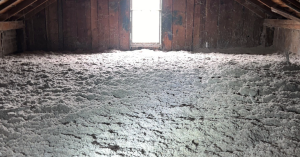 This Collis customer received over $5,000 worth of energy-efficient home comfort upgrades, all at no out-of-pocket cost. Again, this substantial funding is thanks to NYSERDA’s EmPower+ program. This project included 8 inches of cellulose insulation in the attic, among other energy-efficient measures like air sealing of the attic penetrations.