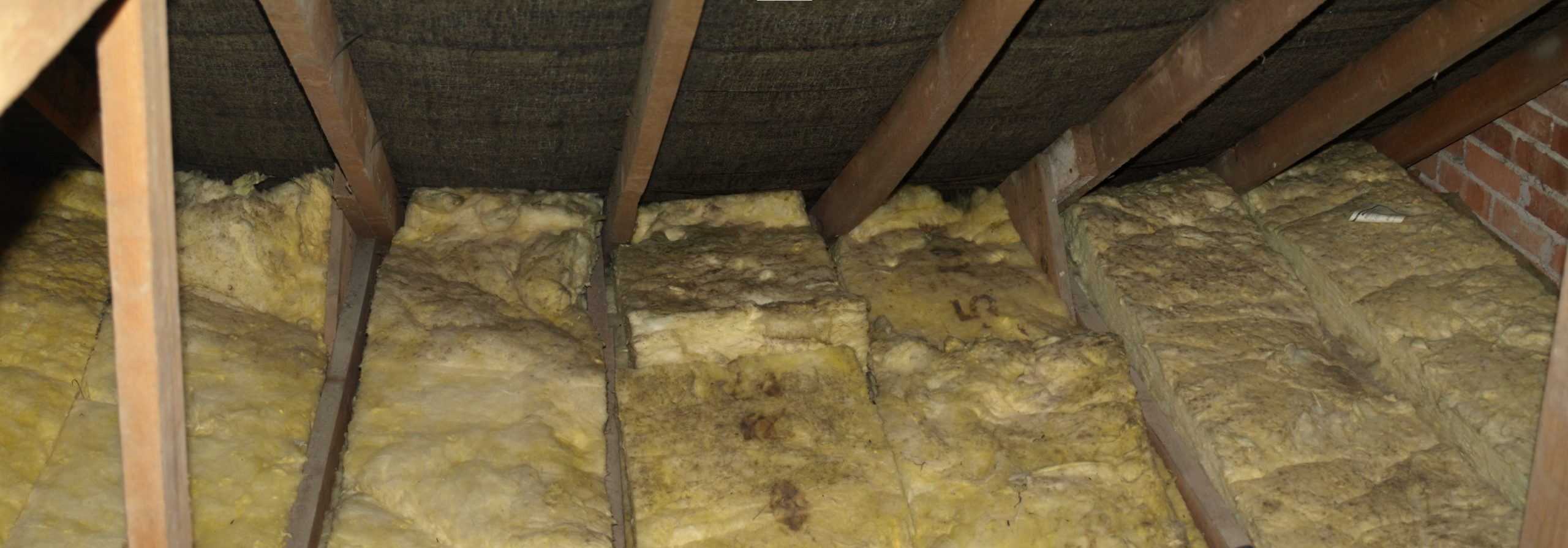
Can Mold Actually Grow on Insulation?
Yes, and it’s more common than most homeowners realize. Mold doesn’t technically feed on the insulation itself. It feeds on the dust, debris, and organic matter that settles on insulation surfaces over time. You might notice a musty odor before you ever see anything, which is often the first sign of a mold problem growing behind walls or above ceilings.The real driver behind mold growth is almost always moisture. Where there’s excess moisture, mold will find a way to grow.
Common Causes of Mold on Insulation
Several conditions can create the right environment for mold to take hold:- High humidity: When relative humidity stays elevated inside your home, moisture levels rise throughout the building envelope. In a humid climate, this is especially hard to control without proper ventilation and a well-sealed home.
- Air leakage: Gaps in your home’s envelope allow humid air to sneak into wall cavities, attics, and basement spaces. That air leakage brings moisture with it, and moisture accumulation in those hidden spaces is a recipe for mold.
- Roof leak or water damage: A leaky roof, a plumbing drip, or foundation moisture intrusion can soak insulation quickly. Once insulation gets wet from water damage, mold can take hold within 24 to 48 hours.
- Poor ventilation: Trapped heat and humidity levels in an attic or crawl space create ideal mold conditions on both insulation and the wood around it. During the summer months, poor ventilation combined with heat transfer through the roof can push attic humidity to dangerous levels.
- HVAC issues: A system that isn’t running efficiently may fail to manage indoor air quality and humidity levels, contributing to moisture buildup throughout the home.
Where Is Mold on Insulation Most Common?
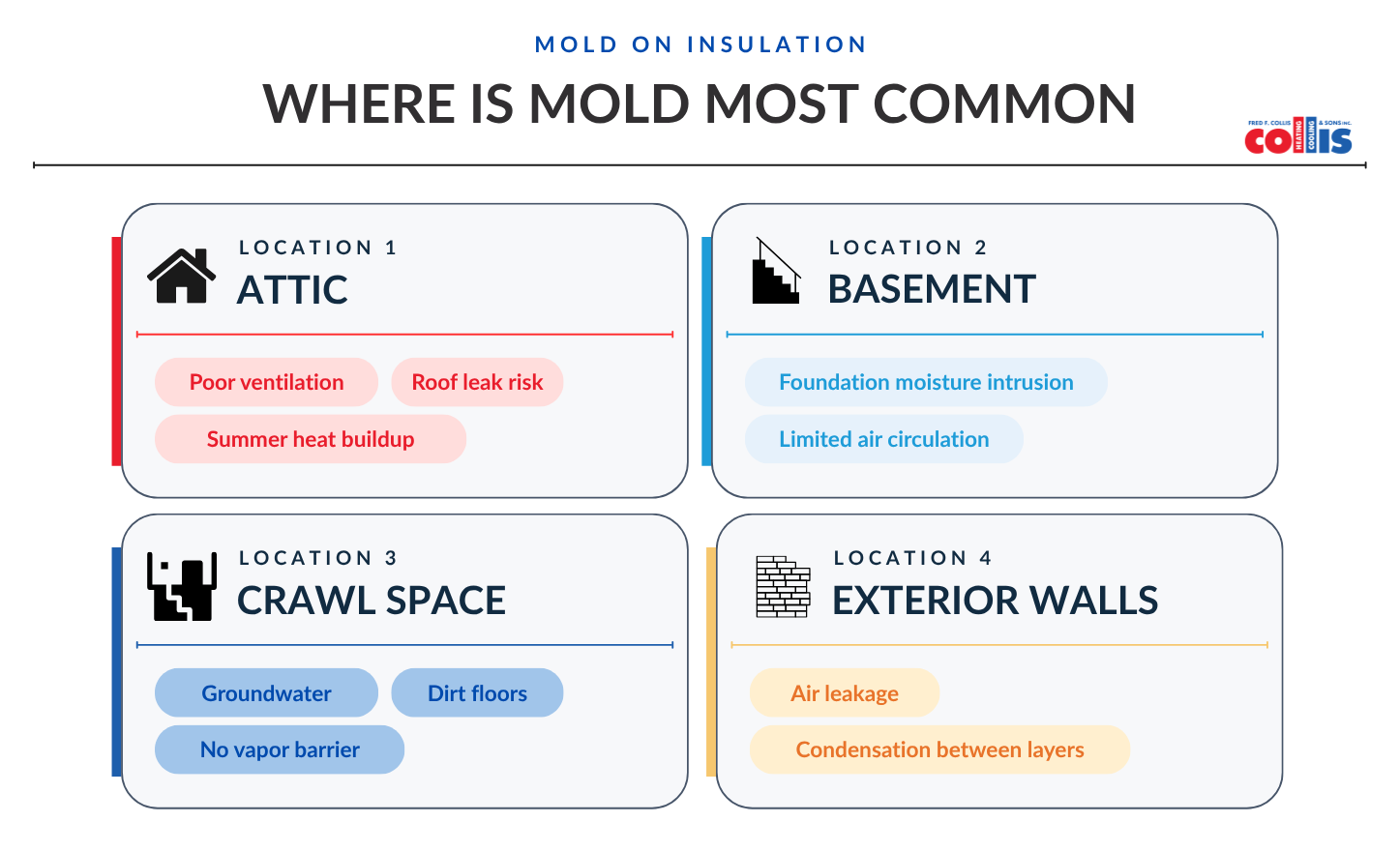 Mold can show up anywhere insulation is installed, but some spots are more vulnerable than others:
- Attic: Poor ventilation, roof leak risk, summer heat buildup
- Basement: Foundation moisture intrusion, limited air circulation
- Crawl Space: Groundwater, dirt floors, no vapor barrier
- Exterior Walls: Air leakage, condensation between layers
Is Moldy Insulation a Health or Safety Risk?
It can be. Mold spores released into the air can cause allergic reactions and respiratory problems, including coughing, congestion, and worsening asthma symptoms. Those effects tend to be more significant for children, elderly individuals, and anyone with a compromised immune system.Black mold in particular warrants serious attention. While not all dark-colored mold is the toxic variety, any mold found in living spaces should be treated as a health concern until properly identified and removed.
Beyond health, there’s a structural concern: mold spreads. What starts on insulation can work its way into wood framing, drywall, and other materials. The sooner you address the mold issue, the less damage you’re dealing with. The EPA and CDC both offer helpful guidance on mold health risks if you’d like to learn more.
What to Do If You Find Mold on Your Insulation
 Step 1: Don’t disturb it. Leave it alone for now. Disturbing mold can release mold spores into the air and spread the problem further.
 Step 2: Find and fix the moisture source. Proper insulation alone won’t solve the problem if moisture is still getting in. Depending on where the mold is and what’s causing it, solutions may include:
- Air sealing: Closing gaps in your home’s envelope stops humid air from reaching insulation in the first place.
- Attic insulation: Properly installed insulation paired with the right ventilation improves energy efficiency, lowers energy bills, and helps prevent recurrence. It also reduces heat transfer through the ceiling during the summer months.
- HVAC maintenance: Keeping your system in good shape helps it manage indoor humidity year-round. The Collis Club Membership is a great way to stay on top of that.
Step 3: Have the insulation professionally assessed. Moldy insulation typically needs to be removed and replaced, not cleaned. A professional mold remediation company can determine the full extent of the problem and make sure the fix is done right.
Count on Collis for Insulation and HVAC Help
If you’re in Central New York or the Mohawk Valley and you’ve found mold on your insulation, the team at Fred F. Collis & Sons is here to help. We’ve been solving home comfort problems for families in this region since 1936, and our NATE-certified technicians treat your home like it’s their own.When mold is involved, the right sequence matters. We’ll refer you to a trusted mold remediation company to have the affected area properly cleared first. Then we come in to handle the insulation work and make sure your home is protected the right way. From there, our free home energy estimates and our Collis Club Membership keep your HVAC system running at its best all year long, which goes a long way toward preventing moisture problems before they start.
Give us a call at 315-768-2323 or reach out online. You can always count on Collis.